



Posts Tagged ‘writing’

Brayden’s Catalyst 1

Brayden very much wished to attend the great college of wizards. He was not, however, invited to do so. He resolved to gain entry through illicit means and become a self-taught magician.

His first attempted approach to the grounds was under the cover of night. He meant to scale the walls at what he scouted to be an unwatched edge. He soon found that the statues standing sentinel over over the walls were in actuality very patient golems. His second and fifth attempts involved unsuccessful bribery, while everything in between involved digging. One may begin to surmise why he was not invited.

Brayden continued to monitor the entrance to the college, hoping that inspiration would hit him at some point. It did one fine spring day when he saw a young woman exiting the college grounds riding in a carriage. Though he saw her for only a brief moment, the image of her blonde, curly locks and soft, pouty lips stuck in his head. She looked to be everything he’d ever wanted in a woman and just looking at her filled him with a sense of desire. He immediately set off to follow  the carriage.

As he stepped off, a hand grabbed Brayden’s shoulder. “You don’t want to do that,” a woman’s voice said.

“Andy why not?” Brayden asked as he turned. His eyes first focused on her body, she was dressed in student’s robes that looks a size too small for her bust. He raised his eyes to her face and found himself looking at something quite the opposite of the vision of beauty he’d just witnessed. Her head was hairless and tiny horns protruded from her forehead.

“Because that was a man,” she said. “Catalyst,” she said, and offered an open hand.

“What?” Brayden instinctively shook it.

“It’s my name,” she said, breaking the handshake.

“Ri–ight. And what kind of name is Catalyst?”

“An Ofyddar name.”

“It’s stupid,”

“It’s better than Brayden.”

He looked shocked. “How did you know my name?”

“You’re stupid,” she replied, and let out a short laugh. Brayden frowned. “Let me explain, and I’m only doing this because I feel sorry for you. If I didn’t like you, I would have let you go after Princess George.”

Catalyst led Brayden toward the entrance gates of the college as she said, “You haven’t been unnoticed in what you do and you’re a bit of a joke around here. You think that because no one’s called you out when you’re hiding that you’re hiding well. And you think that because the walls are so well fortified that the people inside won’t look out. What’s going on is that we’re so well fortified we don’t feel the need to call you out when you’re stalking about. Do you follow?”

Brayden stuttered a bit, then finally let out an affirmative sigh and a nod. He looked away, ashamed, and glanced at his surroundings. He was inside the walls, for the first time in his life. Catalyst continued, “Now, I know your heart’s in the right mode, but your head’s not. What I figure is you need to be told what you’re doing wrong, and then maybe you’ll learn to do things right. Do you know what else you did wrong tonight?”

“Besides briefly lust after a cross-dressing man?” Brayden asked. Catalyst had walked them to some stone benches in the shade of the wall. The sun was getting low and soon the whole front courtyard would be covered in shadow. “Go on, tell me,” he said as he sat down.

Catalyst laughed. “You touched my hand.” She sat down next to him. “I took your name from that contact, and in exchange I gave you something I know.”

Brayden was confused by this at first, but he soon felt a piece of information bring itself to the front of his mind. It was like trying to remember a dream. He had everything there except the words to complete the thought. “You aren’t supposed to do that,” he said.

Catalyst looked immediately ecstatic. “You’re right, I’m not. How did you know?”

“I just d—” he paused, how did he know? It dawned on him quickly. “You told me when you took my name.” Brayden laughed as he rested his forehead in his hands and placed his elbows on his knees. “What do you want with me?” he said after a moment.

“You’re going to help me,” Catalyst replied. “You’re going to help me perfect this information transfer. In exchange, I’m going to let you have access to the library. I’ll check out books that interest you and bring them to my quarters, where you will be staying.”

“What if I don’t want to?”

“You will want to.”

Brayden thought for a moment about his alternatives. Finding that he didn’t have any, he said. “I want to.”

“Excellent,” Catalyst said and stood. “Come with me, it has been a long day and I need to relax in a long, hot bath.” She leaned toward Brayden and gave an exaggerated sniff of the air about him. “You will want to join me.”

Brayden, feeling the same airy desire as when he saw the she-he leaving the grounds earlier, replied, “I certainly do.”

http://iwl.me

I Write Like by Mémoires, Mac journal software. Analyze your writing!

I ran through this several times with difference pieces of writing, and David Foster Wallace is the only one that came up more than once (three times so far). My fiction apparently reads like Rowling, Lovecraft, and a few others. Doesn’t surprise me!

(The result for the above text:

I write like
William Shakespeare

I Write Like by Mémoires, Mac journal software. Analyze your writing!

)

(Originally written some time in early 2002 as a “How To” paper for Comp 101. It amuses me now that I spend a fair bit of time writing how-to documents for work.)

Like any other restaurant, the food prepares of Taco Bell must learn certain abbreviations that mean the names of products and their alterations. This is easy enough, and the food it prepared quickly. However, on certain occasions, someone will place an order with so many alterations, it’ll take even skilled workers a few false starts to get it perfect.

The first thing you need to be able to make the most feared Taco Bell order in Northwest Ohio is to be an employee at a Taco Bell. (If you cannot fulfill this requirement, then skip to the end to get ordering instructions.) Anyone can attempt to make this, but, since the following instructions will be written in measurements of “scoops” rather than ounces, it might be a little difficult.

Now that you’ve got your stripes on and you’ve donned your pepper hat, step in front of the steam line, which is where the heated food products are. Directly in front of you, above eye level, will be the paper products. Grab a pizza platter, which is the only square shaped cardboard box in front of you. Below the paper products and continuing to the right is the shells for various items. What you want to grab is the pizza shells. Those are flat, disk shaped shells that look like fried soft taco shells. Take one, and place it in the pizza box.

Below the shells is the heated food products. There are two rows of pans. In the far right of the first row is a pump, which is used to portion out the nacho cheese. Pump two scoops of nacho cheese onto the shell that you’ve placed in the box. When that is done, reach back to the shells and grab another pizza shell, placing it on top of the nacho cheese covered one.

In the middle of the back row of food product is the chicken and steak. If the steam line is set up properly, the chicken is on the right. Place a scoop of chicken onto the top of the second shell.

To the right of the chicken is the pizza sauce, which is basically a very mild and soupy salsa. Place a scoop of pizza sauce over the chicken. This is the last hot-product to put on the pizza.

Next is the cold product. The first cold product to be put on the pizza is a handful of the three-cheese blend. Make sure that you’ve spread out this blend of shredded cheddar, mozzarella, and pepper-jack cheeses enough that you can barely see the chicken and sauce below it, but it’s not over the edge of the shells.

After the cheese has been applied properly, grab a handful of diced tomatoes from the cold line, and spread them evenly over the cheese.

The third cold product can be found at about eye level on the cold line. Grab a handful of the green onions, apply them as you have the tomatoes. Also on this upper level is the salad dressings, more commonly known as the special sauces. Place three squirts of the white pepper-jack dressing, or Baja sauce, over the pizza.

The final step to preparing the pizza is to place it in the steamer, which is located to the right of the cold line. Pull out the tray, and place the pizza box on it. Push the tray back in, and hit the button. When it beeps, remove the pizza and check to be sure the cheese has been melted. When this is done, place the pizza on the tray and give it to the happy Schroe waiting at the counter.

Now that you know how to make it, perhaps you’d like to know how to order it? It may take the cashier several times to get it right, but all you have to say is, “A Mexican Pizza, no beans, chicken instead of beef, with nacho cheese in the middle, and Baja sauce added on the top.”

The most feared order Taco Bell order in Northwest Ohio is quite the tasty meal. Now to see if Chicago is ready to prepare it . . .

Esben’s Tales part 2

The next morning young Esben found his throat aching from all the talking he’d done the day before. He ate and drank in silence for the day until the Meddyg’s promised visit came. She brought with her this time another ofyddian dressed in armor and armed with a sword. He stood a foot higher than the Meddyg, but his horns were smaller and his eyes more sunken. Esben realized he was staring and turned his eyes to the more visually pleasing Meddyg (who, Esben considered, should she actually have hair, would make a wonderful wife).

Esben started to speak, and it came out first as a squeak. He cleared his throat and asked, “What have I done? To those crackpot cultists, that is.”

Meddyg Ibis sat herself next to Esben on the bed of his borrowed room. Her bulky ofyddian companion shifted to block the door. A sudden wave of dread washed over Esben as the supposition that the Meddyg and her mate were a couple of the crackpots. Seeing the discomfort in his face, Ibis (as usual) laughed. Esben smiled nervously and wondered if he would survive the jump from the second story window at this time.

The Meddyg spoke. “We sank that ship a thousand years ago in the deepest part of the ocean in hopes that history would be preserved until such time when the old gods and demons were no longer … desirable. It’s a terrible thing to destroy a story, so even I can’t forgive you for burning their books.”

Esben cowered slightly more than he’d already been cowering. “You—” he squeaked again, “You don’t look that old.”  Ibis gave him a pat on the back and laughed loudly. Esben flinched.

“Don’t get me wrong,” she continued, “I like you. You’ve done much. You’ve done what the Meddygon could never do. You’ve destroyed history, and prevented a future. A future no one would like, I’m certain of it, but that’s no matter now. Those were the only books and that order of idiots was never much concerned with sharing rituals verbally.” She gave him a motherly kiss on the forehead. “For that, I thank you.”

Esben, still quite nervous, blubbered. “I meant to p–properly dry those books,” he admitted.

“It’s no matter now, young man, there is only a story of it, and if you don’t tell anyone that your deed was all a mistake, no one will know. Now as for your dream of never lifting a finger for yourself again—” she turned to the door guard, “Dafyd, take Esben to the college, then protect him.”

The man spoke for the first time, his voice gruff like a man who’s smoked cigars since he was a teenager, “How long?”

“Until I need you again,” Ibis replied. The two men promptly vanished from the room, leaving the woman alone. She frowned.

Old Man Esben to this day tells of his heroic deeds for the order of the Meddygon and how he destroyed the order of Thedalavey (which he didn’t learn the name of until much later, but he’ll never admit that), ending a long and arduous battle of the cults.

Esben’s Tales Part 1

Esben regarded his past as a series of trials to achieve his ultimate goal of never having to lift a finger for himself again. Having finally succeeded at this goal, he found he had far too little to do and spent most of his time regarding his past adventures. He found it much more fun now that he was old and grey to talk of these adventures rather than go on the adventures, and so Old Man Esben became his name around town and if you gave him a meal, he gave you a story.

The young ones of the village oft thought his stories false, because who on Earth could have done as much as he did?

Who could have possibly slain a dragon three-thousand times their own size, when there are so few dragon in the world? Old Man Esben did when he visited the Isla de los Dragones and defeated their great God-King Godofredo. Ask him, and he’d tell you how he went there looking for a piece of their wealth and found the dragons to be dirt-poor serfs  to a tyrannical despot. He relieved the King of his post (and his head) and left the island after a full year of celebration. With nothing to show for it, of course, but the memories as Godofredo’s body was completely destroyed in retribution and it turns out that the dragons didn’t hoard anything but sea-shells.

Who would possibly want to swim to the bottom of the ocean so search for riches? Old Man Esben did when he heard throwing coal into the deepest part of the ocean made pure diamonds appear. He swam after his coal after an hour and figured it was taking far too long for his liking, but came up a richer man anyway after raiding a sunken ship. It was too bad that the goods taken from the ship were nothing more than soggy old books, but he was sure someone would want them. And someone did, which is all the better for Esben because wet books are heavy and boring to him.

And who could possibly defeat an ancient and dark order of eldritch demon worshippers, or even get involved in that? Why Old Man Esben of course, after he offered his services to dry their water logged books and promptly burnt them to a crisp when they refused to pay him for his troubles of rescuing them.

Ask Old Man Esben what he did after that and he’ll tell you the next few years were terrible for his nerves. He did a lot of hiding, fleeing, and panicking, up until he made his way to an unspoilt village of happy people. These blissful people, seeing him in his weakened, disheveled state gave him food and a bed. They even had their Meddyg give him a visit and patch him up. Esben asked what could he give them in return for this much needed respite, and the Meddyg asked for a story.

Esben told her everything, just as he would tell anyone who asked in his current home town, because from that moment on he felt perfectly safe. He even admitted to her that his goal was to never have to lift a finger again for himself (she laughed) and it looked like he’d gotten to that point finally (she laughed again). Esben always though the ofyddians had a strange sense of humor, but he found himself laughing with her now.

She left him then, and promised to let him rest until tomorrow evening. “Then,” she said, “I shall ask more of your recent encounters. This dark order is larger than you may have realized, and you have done them a far greater injury than you can possibly imagine.” Esben swallowed air and half-choked upon it. She laughed again, more of a pleased grunt than anything, and left.

Ibis’s Flight, part 2

We’d walked for some time in silence through the cave below my home. The only light was from the two small gems Magistrate Cefin and I wore around our necks. They were each smaller that a little finger nail, but they emit enough light to show us a ten foot radius of our surroundings.

Cefin had packed a bag of his personal belongings before he came to my home, and I now carried it for him along with my own. He’d brought objects of sentimental value to himself, and it confused him when he’d watched me pack. “Do you really expect to need a jar of pickled spiders on this trip?” he had asked, “Or a half-dozen ivory spice shakers?” He stopped asking questions about my odd choices when I placed a box of fishing hooks into my bag and pulled out the light gems.

The silence of our walk was broken by Cefin first as he requested that we sit for a bit. As he drank from his canteen I removed a jar from my bag. It contained a balm for rejuvenating tired, aching muscles. I grabbed one of his legs and began to rub the balm on it without his consent. He didn’t object, but did ask where I got it. “From my satchel,” was my answer.

He’d learned long ago that I perform tricks beyond his understanding and had decided to stop asking about them. I often frustrated him by truthfully answering the questions he asked, but reminding him that he’s not asking the right questions to get the answers he wants. All the years of this annoyance must have finally sunk in. He leaned forward and asked a better question: “How did you get it from your satchel when you did not put it there in the first place?”

“I traded a collection of dried butterflies for it,” I replied. His eyes narrowed; I laughed. I moved to applying balm to his other leg and continued, “There was a Meddyg, rather a Shaman, in a far away land in need of butterflies for his potions. I asked for a muscle-soothing salve in exchange and he agreed.”

“I’ll never understand it, I suppose,” Cefin said. I gave a short chuckle and continued masaging his legs. No matter how close he desired to be to me in his youth, I always pushed him away by confusing him. It was easy to do, as it seemed no human was capable of understanding instantaneous trade, or communication, over long distances.

“Oh, you just don’t want to,” I said and stood. I wiped the excess balm off my hands on the bottom of my cloak. It would collect more dirt from the cave, but cleanliness didn’t much interest me at this time. “It’s like an ethereal market in the back of every Meddyg’s mind; one offers up a number of items for trade and asks for a specific need in return for whatever they take.”

“I get that much,” Cefin said, “State’s tried to replicate it and force the villages into joining their setup. I don’t get, and I’m sure they don’t get, how you move physical objects such great distances in no time at all. They instead use objects made to specific standards and place them in every city, town, and village, so that anyone who wanted a tool for a task has what they need available.”

“It’s a horrible substitute,” I said, “You can’t make a standard wolf to trade for a standard wife.” The look on his face amused me, as did any expression of realization from a human.

“So you, with the she-wolf,” he stuttered. “How did you get a wolf’s brain into a woman’s body?”

“Magic,” I replied. An overly simplified answer, one which he was again not pleased with. Magic was just a word to describe things unexplained or not understood and he knew this; he also knew that everything occurred for a reason and that if something seemed magic, it was because they just hadn’t figured it out yet.

“I can’t tell you how to do it without you taking years of training as a Meddyg, Cefin.” This was the first time I’d used his name since he was in his twenties, long before he was the Magistrate of the village. Hearing his name spoken resonated with him and brought him back to the reality of the situation. He was no longer a Magister, and as such I did not call him by that title.

“I’m not happy with that answer, but I suppose I’ll have to accept it. You have rules to follow just like anyone else.” He stood and stretched his legs. We continued on in silence again.

Ibis’s Flight part 1

Consider this a rough draft. Feel free to let me know if I did anything stupid.

The woman tapped her forehead with two fingers on her right hand. The man furled his brow as he thought about what that might mean. Meanwhile, I watched.

“Why do you keep asking me these questions?” the woman asked, “Why is there a hearing? How can you not look at her and know she is sinister? She stole my mind,my body, my life! She turned me into this!” Now she rose to show the audience of one herself in full: a thoroughly average woman of medium stature and weight. His brow remained furled.

She then banged on the desk before him, “YOU! ANSWER! She has you now, doesn’t she? She’s warping you! She-”

“He’s not my type,” I interrupted. Her face twisted into an impudent snarl; her nose curled as if something rotten were thrust below it. She aimed a perfectly normal, human finger at my face.

“She has no respect! See how she interferes with the proceedings!”

“Which you were just arguing again-”

“It’s not your turn!”

I put my hands up in resignation and remained seated as she breathed heavily through her average-sized nasal passage. By now the judge in this case had attempted to unfurl his brow by applying great pressure from his fingertips.

“Now as I was saying,” the woman continued, feigning calm but still maintaining a tone of indignation in her voice, “She has stolen everything from me and turned me into something I cannot stand to be. She did not give me what I asked for, and she has ruined my life. I cannot go back home! I cannot move on!”

“Madam,” the man finally spoke. “This is something I see quite often. Ibis is someone I see quite often.” The woman’s face piqued. She looked almost thrilled to hear that I see this magistrate regularly. “People come to her for miracles and she gives them reality. What did you come to her as? A she-wolf. What are you now? A human. You wanted to be a wife to your master, and now you are. I don’t at all see how the Meddyg failed in your fantasy.”

The woman’s excitement quickly waned. “But he does not want me, and it is because she did not make me beautiful!” I laughed, but the judge put up a finger to silence me.

“Your master does not want you because he wanted a dog, not a wife,” he said, “I suppose Ibis intended you to realize that sooner.” He looked to me and I nodded. “She’d have turned you back in an instant if you’d just have asked. It’s a shame she had to waste my time like this.”

The woman bore a look of confusion now, her eyes twitching slightly at the thought of betrayal. “I don’t … understand.”

“No, I don’t think you would. Meddyg Ibis, if you please.” He gestured to me, then to the woman. “I would like you to undo whatever it is you have done to this beast.”

“Oh come now, Magister, I didn’t make her that hideous,” I said, though he frowned disapprovingly at me. I laughed and pulled a collar and leash from my satchel. “From bitch, to bitch, to bitch,” I said as I latched the collar around her throat. The words were unnecessary, but it gave me some mild amusement as she tried to feign reluctance at receiving the leather strap.

In an instant a large black half-wolf sat upon the magistrate’s chair. Whatever other half her dog self was, I never bothered to ask. Perhaps I did inquire when I returned her to her master a short time later, but as it is unimportant to me, I retained no thought of it. I’m sure the mystery will allow any number of story-tellers to fill in the blanks as they see fit based upon their audience. The man thanked me for return of his dog, and made no mention of the woman who followed him home from hunting the day he lost her.

The magistrate called upon me at my home later that week. It was no small feat as I lived an hour’s walk from the village and he was far past his prime. “I do make housecalls,” I said as he opened my door. He never knocked, in all the years he’s visited me he has never knocked. I remained facing the pot of tea I had prepared as the leaves steeped. I heard him seat himself at my small table.

“One of these days,” he said as he stretched his legs under the table, “It will not be me and you will be forced to admit that you can’t see into the future and that you’ve been making tea for two every night for twenty-odd years, whether I show up or not.” I brought a cup of tea to him bearing the same mirthful smile I always do when he says that.

“What brings you here this time?” I asked. “Is it the puppies?” He gave me a quizzical look that quickly turned to realization. He chuckled, not because he was amused by the comment, but because he was nervous.

“City affairs,” He said and sipped, eying me over the edge of his cup. He was trying to gauge my response, but it was always hard for him. Familiar facial tics and twitches were not something I had. My eyes did not shine when I was filled with glee, nor did my nostrils flare when I was angered. To his, and many others’, irritation and discontent, I was eternally bemused by the daily lives of humans.

He continued to sip, and to stare. This had to be big news. I retrieved a bottle of liquor from my cupboard before returning to the table and filled my teacup with it. I held it out to the magistrate and he set his own cup down in favor of the alcohol. This is really big news. I stared into his eyes as he sipped his new drink.

“Well, your wish is coming true,” I said to him after he finished the shot of liquor. He started, unprepared for my statement. “If you’re wondering how much I know about what you’re going to say, you can be delighted or dissatisfied in knowing I have no idea what you’re here for.”

“State has taken the village,” he said, “They will come for you in the morning. They will not find me in my office tomorrow, and they will come for me, too.”

For the first time in three decades, I frowned.

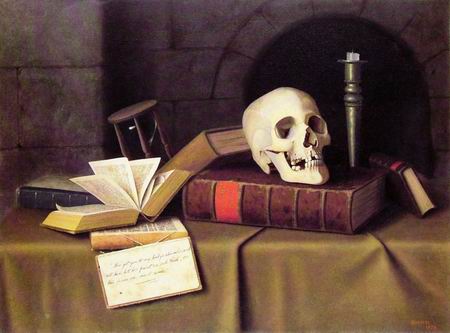
William M. Harnett, Memento Mori—"To This Favour"

Memento Mori, “To This Favour,” 1879

Oil on canvas

William Michael Harnett
(American, born Ireland, 1848-1892)

The Latin Term memento mori describes a traditional subject in art that addresses mortality. In Harnett’s example, the extinguished candle, spent hourglass, and skull symbolize death. A quote from William Shakespeare’s Hamlet, inscribed on the inside cover of a tattered book, reinforces the theme. It comes from the play’s famed graveyard scene, where Hamlet discovers a skull and grimly ponders his beloved Ophelia, ironically unaware that she is already dead. The “paint” in the quote not only refers to Ophelia’s make-up, but also wittily evokes the artifice of Harnett’s picture.

Mr. and Mrs. William H Marlatt Fund 1965.235

(The Cleveland Museum of Art)

While most still life paintings offer no narrative in their imagery, this does not mean there is no meaning to the piece. The meaning of this work by William Michael Harnett is offered directly in the title: Memento Mori, “To This Favour”. Even viewers not familiar with the Latin phrase memento mori can suss its meaning when viewing Harnett’s painting. An empty hourglass, a burned candled, and a skull are all icons of passing on, giving rise to feelings of one’s own mortality. As the phrase translated states, “Remember, you must die,” and so the viewer does. However, the meaning of this memento mori goes beyond that simple phrase.

“To This Favour” is a predominately dark piece, both visually and thematically, drawing the viewers attention to specific iconography with the touches of whiteness. The largest body of light color is the pages of the open books on the left. Harnett is known for his style of trompe l’oeil; in this instance he tricking the viewer’s eye into thinking one of the open books is motion. The upper of the two open books has three pages splayed in a position that would be impossible to capture in a still life painting if it were actually in motion. Each of these three pages curves in the exact manner one would expect it to do if it were falling under its own weight after being turned and left to fall to the opposite side of the book. Such is the trick, the tromp l’oeil, that the eye thinks the image so real that the page would fall at any moment. The book itself shows no meaning of death. The viewer cannot see the title nor read the text within it. Rather than be a symbol of the permanency of dying, the book, being half-open and in motion, may be a symbol of life: a life life half-over and passing quickly to the end.

The lower book is open as well, though its cover is torn from the binding. The aged, damaged book cover hangs over the edge of the table by a thread as if it, soon shall die. The inside cover is the closest object in the painting to the viewer, demanding one’s attention to the quote it bears. From Shakespeare’s Hamlet on the subject of death, the inscription reads: “Now get you to my lady’s chamber, and tell her, let her paint an inch thick, to this favour she must come.” In the play, the paint is Ophelia’s make-up; in this piece, the paint is the oils used by Harnett. Both paints are applied with thoughts death, which may have prompted the artist to use this particular quote. As one may know, Ophelia is already dead at the time the line is spoken by Hamlet, further compounding on the theme of death in the painting.

The next largest collection of whiteness is the skull, quintessentially the most recognizable symbol of death. The skull, like the book, is aged and damaged. It lacks several teeth and is a dirty, off-white color. Unlike the book, the skull faces to the side. The skull looks to the right of the viewer, whereas the book’s cover opens to the viewer directly. This positioning by Harnett aids in drawing the eye to the quoted text for which the painting is titled. The skull rests atop yet another book, this one much thicker and less damaged than the first two. The spine shows it to be a collection of Shakespeare’s Tragedies, which, like the thoughts this painting is meant to provoke, is full of death, loss, and mourning.

Another obvious symbol of passing used by Harnett is the extinguished candle. Light entering the scene from the left side of the painting creates a reflection on the candlestick. A broken line of white draws the viewer beyond the darkness of the whole piece to the candle. On the table, it sits behind the skull-topped book. Behind the candlestick and skull is naught but a darkened archway; a light-less passage through which the used-up candle cannot guide the viewer. Even the off-painting light source cannot guide the viewer’s eyes to what lies within that hall. It creates a sense of anxiety and anticipation at the thought of the great beyond. One cannot see what is through the passage, just as one cannot know what is seen after death.

Behind the open books sits an empty hourglass, presumably the sand has run out to the bottom though it is not seen in the painting. It is yet another iconic reminder of one’s own mortality and the passage of time. It is tilted in a slightly unsettling way and is perhaps propped up by one of the other books behind the open pair. Like the open book before it, the hourglass appears to be at the cusp of motion. It appears ready to fall, or even already falling, in its tipped position. The only portion of the glass seen is that which reflects the light from the left. The lighting effect may be Harnett’s real reason for presenting the hourglass at an angle. The glass is so clean that the viewer can see to the stone wall beyond and, had the hourglass not been positioned as it is, the reflected light may have been too much or too little. Too little, and the hourglass would go unnoticed. Too much and it would detract from the whiteness of the book cover and detract from the intended focus.

The books surrounding the hourglass have no visible titles, though they appear to be at different stages of aging. One book, positioned at an angle on the left side of the Shakespeare tome, has a few pages that seem to be shifted and poking out of the rest. This can be read as a well-used book that is possibly near “death,” though not as near as the book with quote upon it is. A book lays flat to the left of the hourglass and the open books. It appears to be smooth and not at all damaged, though perhaps a bit dusty. The sixth and final book is perhaps in the same stage of life: its pages are neat and straight, but are yellowed from age.

The table upon which this memento mori still life is placed is a drab, olive-brown. It does not shine like the silk painted by other artists using oils, but it is as smooth. It seems to be very plain, which could be indicative of it being over-used and near its end along with the books and candle. The lack of luster in the cloth, as well as the rest of the objects, shows death to be very mundane and common. This fits with the sense of tragedy in Hamlet as no death in the play is glorious, no one died a martyr, and celebrated at another’s death.

Still life paintings are oft devoid of deep meaning. However, William M. Harnett’s Memento Mori, “To This Favor” bears a rich subtext of the commonality of aging and loss in addition to it’s obvious subject of death. Each object is positioned to relate to the other as aging, death, and anxiety all relate to each other. Harnett’s work reminds one of one’s own mortality as intended, but also reminds us that those we love will pass, too.

Dinosaur Hunter

Forbes published an article about the company I work for.

They got a few things wrong in that first paragraph.

Tacos

Tonight James made tacos. While we were each constructing our tacos, there was a hissing noise, not unlike the sound of gas slowly escaping a tiny aperture.

“The gas is off, right?” James asked. I glanced at all the dials on the stove to confirm.

The sound seemed to be coming from our stack of appliances in the corner of the kitchen. I unplugged them all, just in case there was something going on with them. The sound persisted.

I opened the cupboard below the appliances and gave a listen. The sound got quieter.

James went outside and tightened the hose’s valve as that is right outside where the sound is coming from. There was no change in the sound.

I decided to stop worrying and continue to build my taco. As I opened the jar of salsa, the sound stopped.

“Yeah, let’s throw that out.”

An Old Short

Originally posted on TCB Mon, 15 Dec 2003 01:27:59 GMT

Sandra sat at the terminal, leaning on her crossed arms in front of the keyboard. She couldn’t believe what was happening. Shock, worry, fear, and all the emotions she was told never to feel were washing over her face all at once, which resulted in her stone-cold visage squeezing out a few salty tears. These feelings, as she knew, were simple replacements, something to soothe her most prominent feeling of complete emptiness.

There was something missing in Sandra now, and she knew what it was. The connection had been severed. She was the most alone she had ever been in her life, though she was currently in a room with at least a dozen others, all in as much shock as her from the disturbing occurrences.

The air echoed with questions of Amanda’s well-being, doubts of her survival, and premature praise of the agent’s past life. The video feed was down. Audio was gone, too. Sandra, along with two others, waited at their terminals for any sign of Amanda.

But Sandra knew that there was no hope. Amanda was dead.

Read the rest of this entry »

An Old First Post

I, uh, got a bit bored. Here’s an ancient post from the Jurassic Era. TCB was five years old in 2003. That makes it fucking old now.


Schroe
Thu, 11 Dec 2003 07:45:12 GMT

I made a huge mistake. I thought about upgrading from ib v3.0.2 to ib v3.1.2. As you can see, the Cork Board is currently on 3.1.2, but at no small price. While upgrading the Cork Board, the old databases became corrupt, and I had no working ones elsewhere. All the posts were lost. All 14K+ of them.

So it’s gone. The backups that I did have were no good. It’s all gone.

Not like there was much there, but I’m sorry. I’m sorry I lost what people had given.

The Cork Board celebrated it’s fifth year this year. It went by with no one noticing, and with me not saying a word.

I guess a new start is something I need, though. Now that it’s completely clear of any bugs, any missed images, I should be fine. I should be able to keep this up again.

If I don’t go crazy from everything else first.

So, the first question, which I do not expect to be answered about the board, as it is a Happy Question and must be answered happily (or at least in an entertaining manner) and I will not be happy with compliments or criticism right now – where was …. right, the Q.

How does it look?

Read the rest of this entry »

Echo

Echo exists because I had a dream about dying.

Echo is a main character of a story called Vivify that I wrote in October 2007. I recommend reading it before continuing. (Unlike a lot of my other writing, I’ve re-read this and didn’t hate it.)

Echo is the first of the fifth generation Vivified drones created by Dr. Weiss of the Vivifix Corporation. With all the vivi you’d think I’d named her that, but no. Echo’s past life remains an unknown to herself, but she has seen pictures of her recent past. The first two iterations of Vivified (Alpha, Bravo) were her, suspended in fluid for testing connections and controls. Future iterations had some motor skills, but the Echo line was the first to be able to walk and eventually be taught to function.
Read the rest of this entry »

Dream 09.05.27

I wish I had more time to write this out. For now it’ll just be a braindump so I don’t forget it.

The dream started with James and I going to Florida. (I have had two previous dreams wherin we accidently end up in Florida and need to get back home ASAP for work.) We needed a place to stay while we were down there, so we thought it was a good idea to steal the old mobile home I grew up in. (I have had several other dreams involving owning this mobile home or others as secondary housing.)

Upon examining the interrior of the trailer, I found that my parents had not completely emptied it and many of my mother’s old business clothes were there. I held up a dress and said to James, “I should take all these home and wear them to work. I can totally start bringing the 80s back.” (I need new business-casual clothes, getting old stuff might be a good idea). Inside the bedroom, my parents old waterbed was still there, along with some fans.
Read the rest of this entry »

Citibank refunded the charge on 5/19 (it didn’t show on the online statement until 5/21). Even though this was resolved, I still received a new message from Valve’s support. They asked me for a screenshot of the fee. I obliged and gave also a screenshot of the Citi CSR stating which charges were considered foreign transactions.

Here’s the conversation through Steam’s support:

8 « Message by Thomas on Tue, 19th May 2009 5:11 pm »
Hello Amanda,
We are still working on this issue and have been talking to the bank, can you please confirm the dollar amount of the foreign transaction fee that they are charging?

Read the rest of this entry »

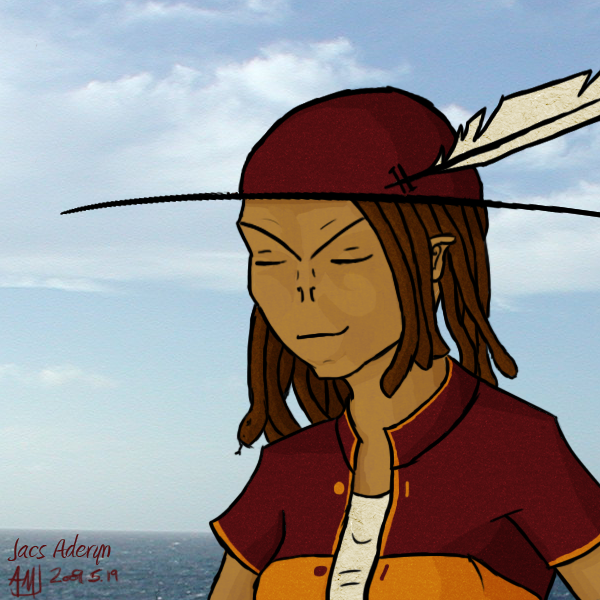
Jacs Aderyn

Jacs has a thing for slave traders. A hate thing. A passion to destroy the market of owning people. It may have something to do with her TRAGIC HISTORY of being a slave herself.

Jacs is a privateer sanctioned by several governments to stop the trade of living souls that is legal in the majority of countries in her world. These governments would rather not get involved in direct confrontation with the larger ones, so she doesn’t let on that she’s doing the good work of the small guy. She also wants some profit. So she knocks off the captains of the slave ships, claims the merchandise as her own, and gives them two options: Stay and work on the ship or swim back home. She pays a small wage if they stay, which they can save (to pay Jacs her fee for saving them) or spend (she let’s them buy whatever they want … from her) as they please. Once they’ve paid off the fee, they’re free to go wherever they want. Many end up staying because they’ll make more and be safer on her ship than if they would go back home.

Fee Removed

EDIT on 05/21/09: see bottom for more details

Update on the foreign transaction fee issue. After waiting a few days for a response to my previous call, I decided it would be better to call them. After explaining the situation to “Hugo,” I was transfered to a supervisor (“Mr. Thomas”). I explained the situation to him, and he stated that the foreign transaction fees are automatic and they do not watch for them. Since it is so common for US businesses to process through Canada (and warn their customers of possible fees) they don’t bother with alerting customers of foreign purchases. He waived the $1.92 and thanked me for being a customer. I’ll be checking my account online at the end of the business day to verify that it’s been taken off.

If Valve had at all stated that they process payments outside of the US (in plain text would have been nice, but they didn’t even have it in legalese), I would have made the purchase in a different manner.
Read the rest of this entry »

I, like many others out there, avidly review my credit card statements. I view the card’s activity online before statements to make sure there aren’t any unauthorized purchases on there. I don’t think I’ve actually found any in the eight years I’ve had this card. When statements come around, I like to know exactly what finance charges are applied. This month, for the first time, I saw “FOREIGN TRANSACTION FEE*FINANCE.” Having never made a foreign transaction on this card, I immediately questioned it through their secure messaging system.

Subject: FOREIGN TRANSACTION FEE*FINANCE
Date/Time: 05/13/09 07:22:15 PM
You wrote:
I would like more detail on the following as I do not recall making any foreign purchases:
05/12/2009 FOREIGN TRANSACTION FEE*FINANCE CHARGE $1.92 Transaction Type: 3 Post Date: 05/12/2009 Reference Number: 00000000 Charge To: Standard Purch

Read the rest of this entry »

Sleep

Not every time we sleep do we reach a deep enough state to dream. For weeks my rest has been frequently interrupted and it seemed I’d never dream. After roaming around the house for some time in a half-coherent stupor (a state in which I seem to be able to do little more than care for Jonas and eat), I managed to sleep well in my short rests. It’s as if my body has me sleepwalking consciously during the day so that I may dream when I do sleep.

I dreamt that I was at a convention center for the purposes of an audition. It was for the part of some background character, only a few lines, from a comic or something equally nerdy that was being made into a movie. At the time the dream started, or at least what I recall, I had already finished my audition and was waiting for James to pick me up.

Read the rest of this entry »

Inner Conflict

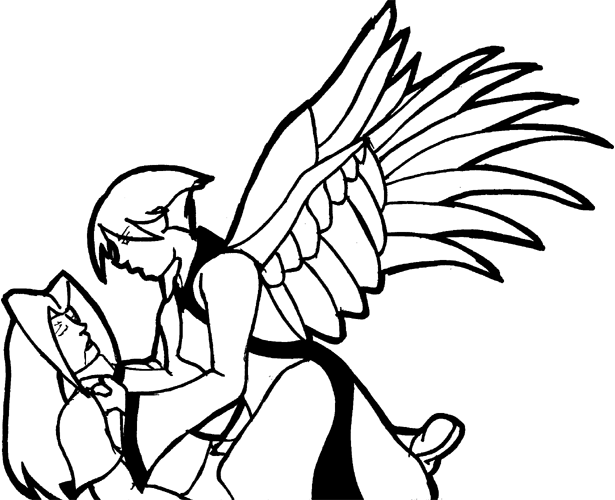
Another image often stolen by tortured suburban teenagers finding random images on the internet and applying meaning where there is none, or applying their own meaning over the artist’s intent. This image shows another god character that was displaced battling internally; her original, non-god soul seeks to remind the new amalgam in charge that she was the first and she will not be brushed aside. This lady was intended to be a bit of a god killer, though born a mortal. Being mortal, she couldn’t properly destroy the souls of gods and they lived in her.

HQotD

As I sit in this gliding rocker at 3 am, having just fed my son a bottle of milk, I’ve come to realise that I’ve done some impossible things.

Years ago, when some of my online friends first met me, I hated people. I couldn’t stand most social contact; I even despised others trying to strike up idle conversation in vain attempts to win friendship. The concept of dating horrified me as well. Spending so much time and money in hopes of finding someone to share your life, or at least the night, with. The whole world seemed to value the quantity of people known rather than the value. I felt stuck; I sought to gain a few good friends rather than an abundance of acquaintances. I wanted more than anything to have a best friend that would never leave my side.
Read the rest of this entry »

Monday

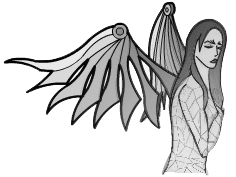
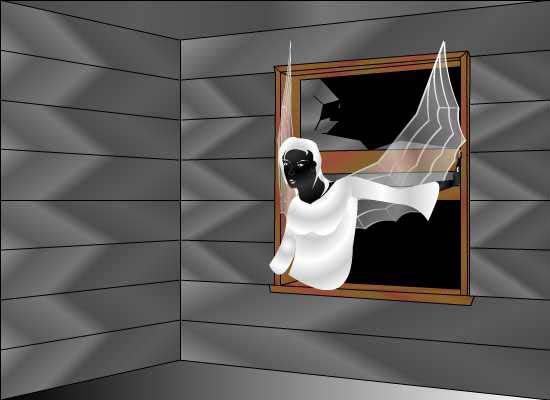
Early update today from the laptop. I woke up about a half hour ago unable to continue sleeping through a headache, so I took some painkillers. They kicked in finally, but only mildly, and the alarm’s going to go off soon … oh well. Two more angels and the god figure mentioned before. Metal/Gemstone angel thing and the silk one. I started drawing her in flash when I was in high school and never finished. I don’t have the flash file anymore so I can’t finish unless I start over. God figure lady doesn’t need wings, nor does she need to explain herself to you!

Images Unrelated To Content

I had a dream last night that they made yet another X-Files movie. Having not seen the previous movies, nor ever really watching the show once it developed a continuous plot (I much prefered monster-of-the-day type stuff from that show), this dream was rather odd.

It started with Mulder and Scully as a married couple seated at dinner. Scully was serving various foods with a one-ounce ice cream scoop to Mulder by placing them on a music stand while he read the newspaper. Suddenly, there’s a rumble. They panic and the camera immediately goes to the window to show a T-Rex is walking by. There’s another rumble and another until the T-Rex has gone away. “What terrible visuals,” I dream-think as I notice the choppy, unrealistic movement of the T-Rex, “The writers must want this to be a dream sequence.” No one wakes up, though, and the weirdness continues.

Read the rest of this entry »

Angels of Ice and Fire

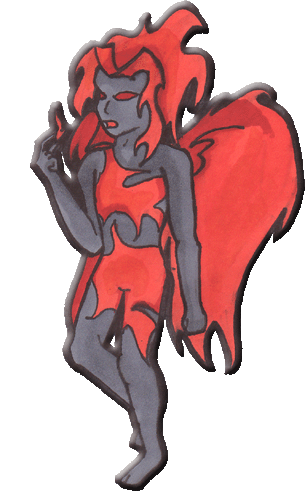
Same images, different medium, different text.
My breech baby (who has hair already, I’m told. Yay ultrasounds!) is facing the the wrong way in both ways. It’s like he’s hugging my spine.
I had an extremely painful dream wherein my husband was tickling me so I was too busy gasping and giggling to be able to tell him that he was actually causing me a great deal of pain. When I woke up from it, shortly before the alarm went off, my back was still hurting just as bad.
Breech baby facing the wrong way means every contraction is BACK LABOR.

Angels of Ice and Fire

A couple of characters I never really went far with. There was one central god figure with angels assigned to different elements at her beck and call. In addition to these two were Silk (her wings were spiderwebs, too drow-like so I never really drew her), Metal (razorblade wings, I might have drawings of her I’ll post later), Wood (wings were leaves, body was treelike—think a flying dryad). That’s all I can recall right now. Also the story was based around each planet in the multi-verse having its own god figure, and the one that ruled these angels was created as a victim of one that lost her planet but managed to escape. Gosh, maybe I should write this story for once. I’ve had it in my head since high school.