24 Jan
ever look in the mirror and wonder what people see in that person
Author: Meddygon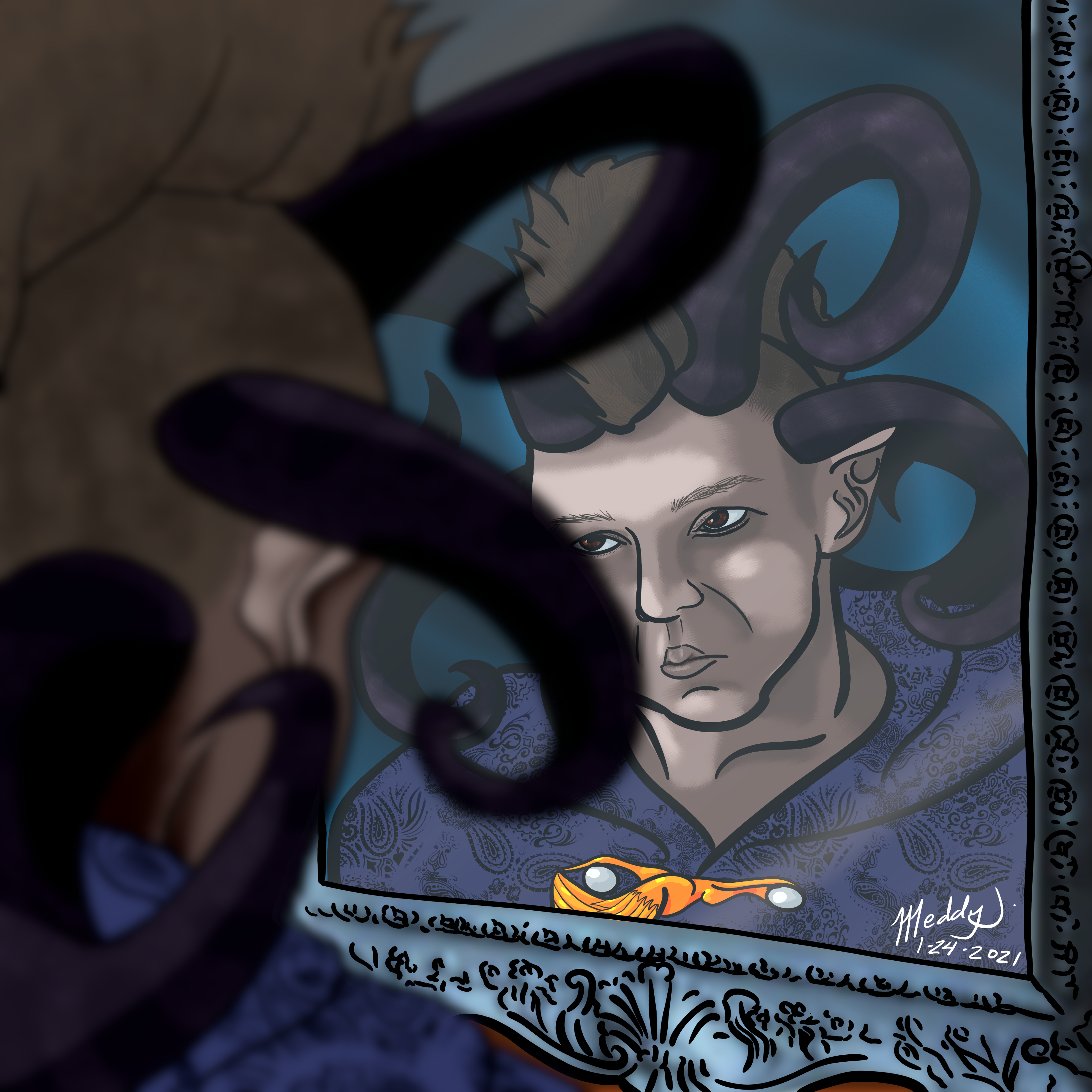



26 Nov
19 Nov
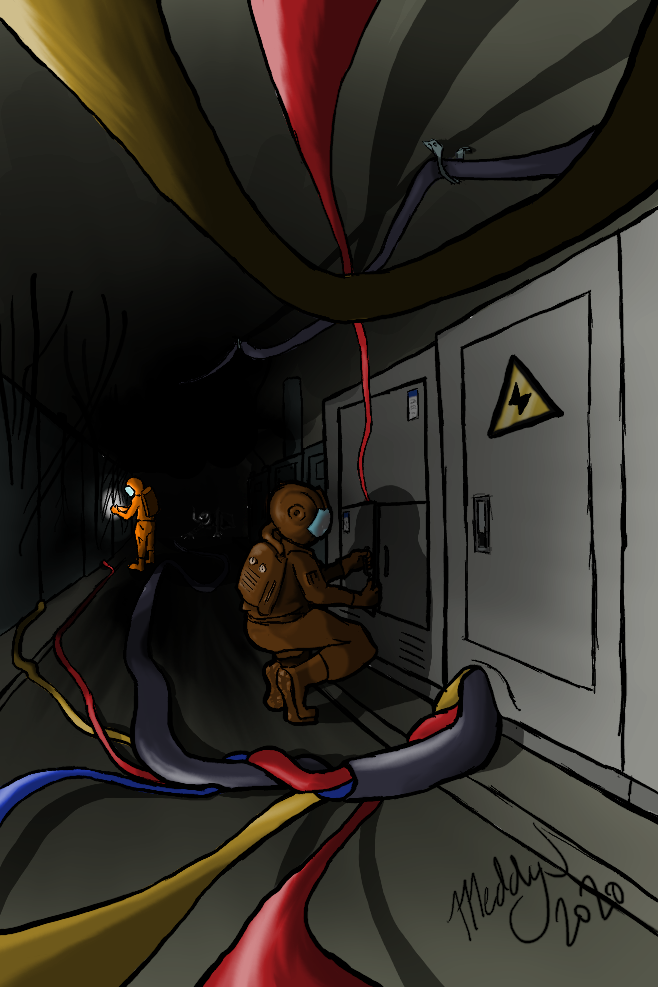
Sometimes, your Cap’n gives you all crunchberries. Sometimes, it’s all corpses.

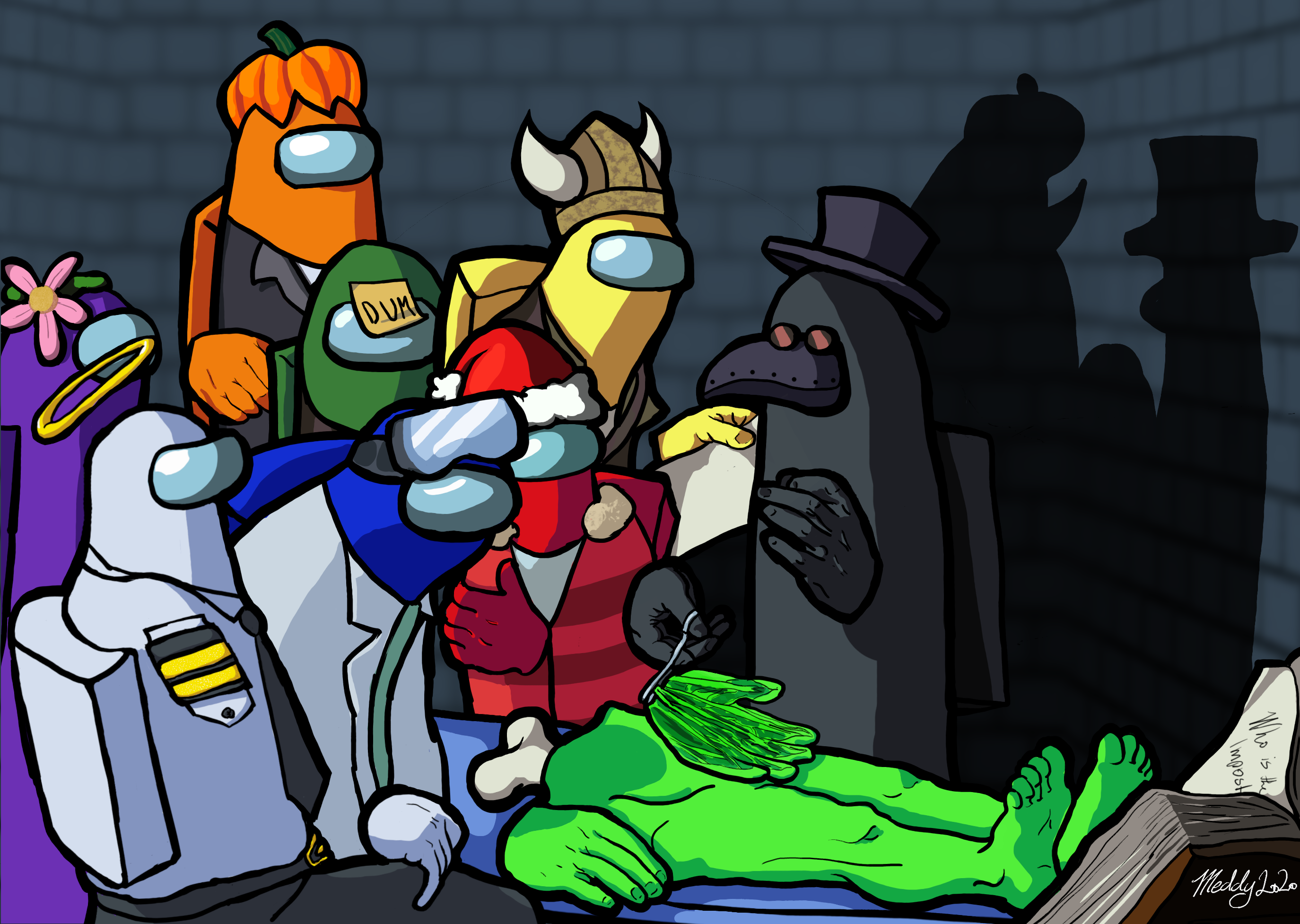
I spent a cool 8-11 hours, I don’t know how long really, hyper-focused on turning every piece of Crewmate art in Among Us into a walking corpse. Animated and everything. I didn’t get to the “How to Play” section, but I did do all the map Cover-Art.

I tested it out with some of the folks on the AlexAce discord server. I streamed the drawing process, too.

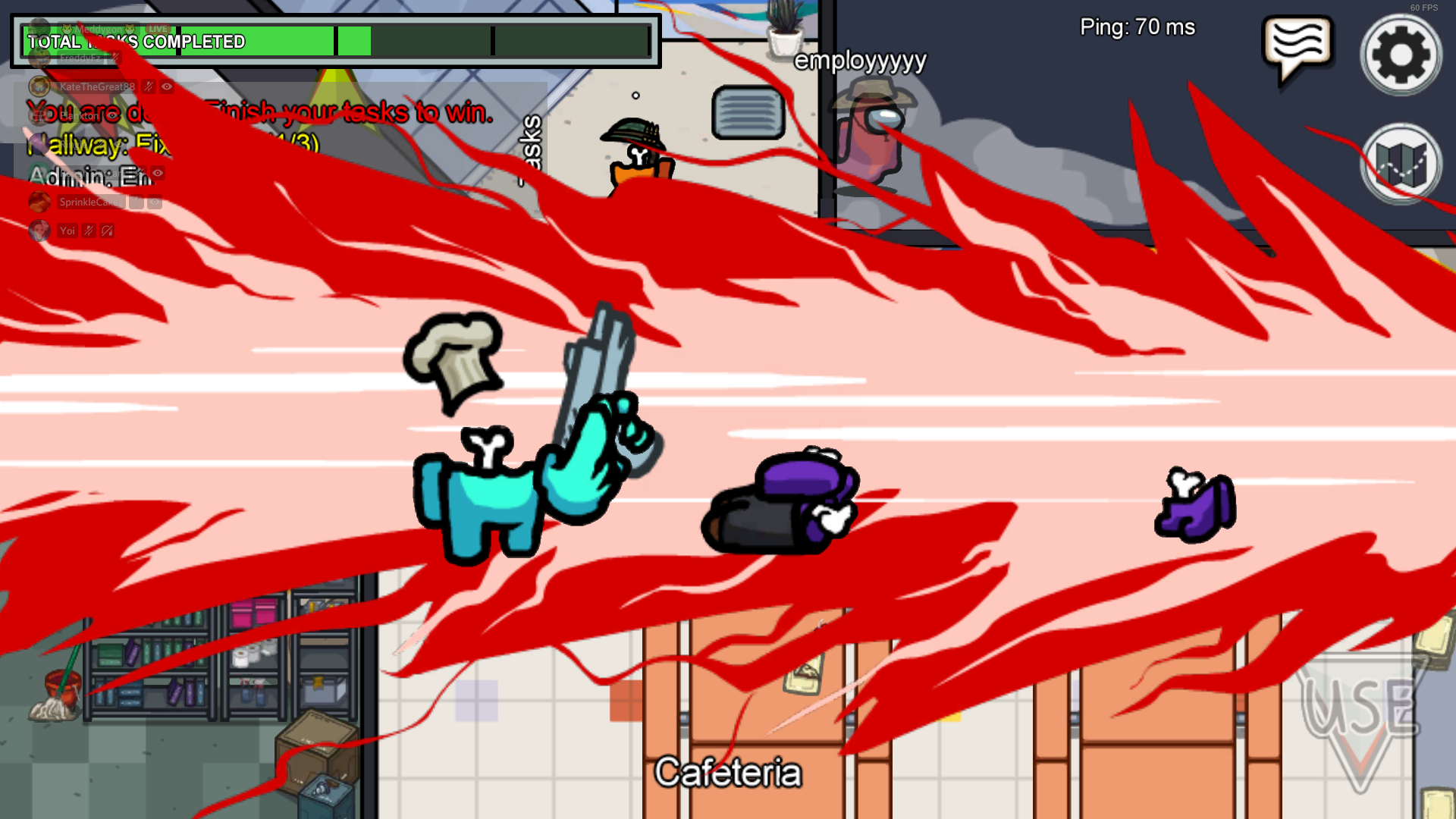

This was made for PC and is intended to be used only there. I do not plan to make it available in any other way. To use these textures, download the following files and REPLACE the ones in your Steam directory with these. You can return them to normal by telling Steam to validate your files.
Links removed because they’re for an older version of Among Us and I haven’t updated it yet.
15 Oct
23 Sep
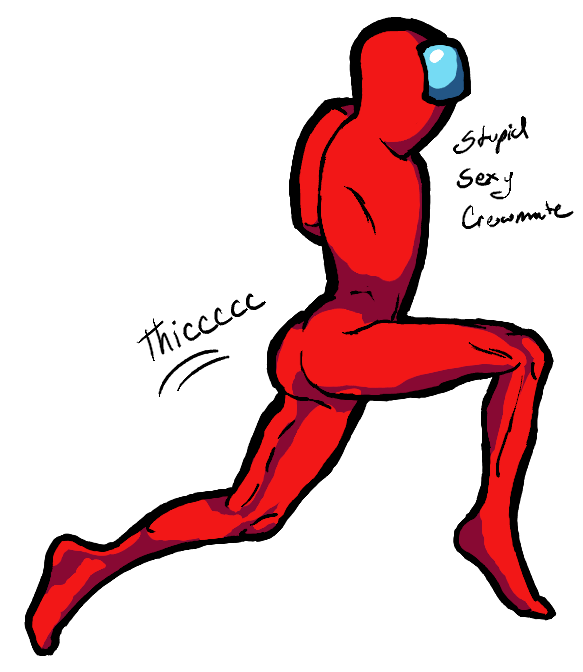
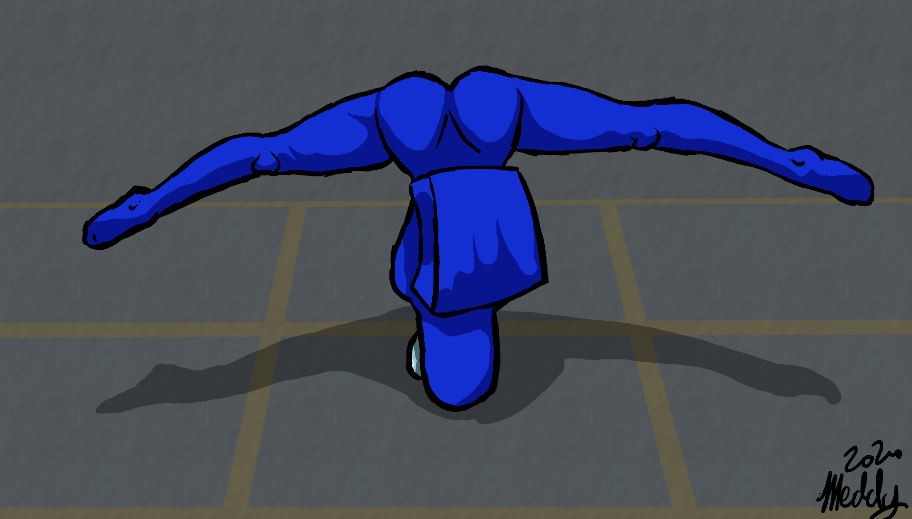
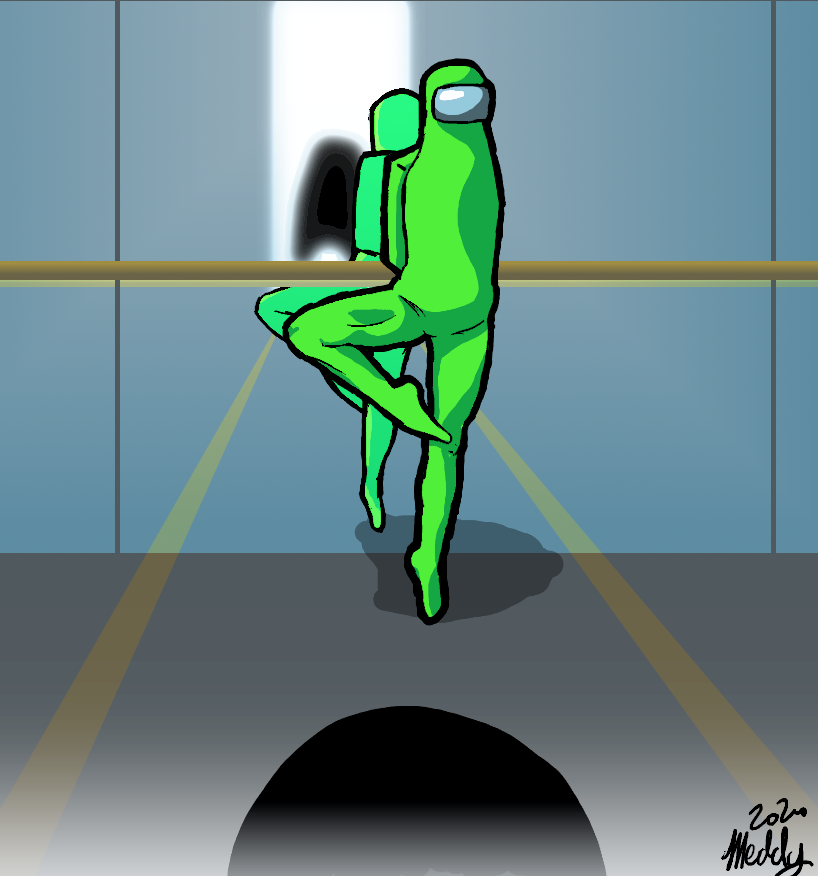
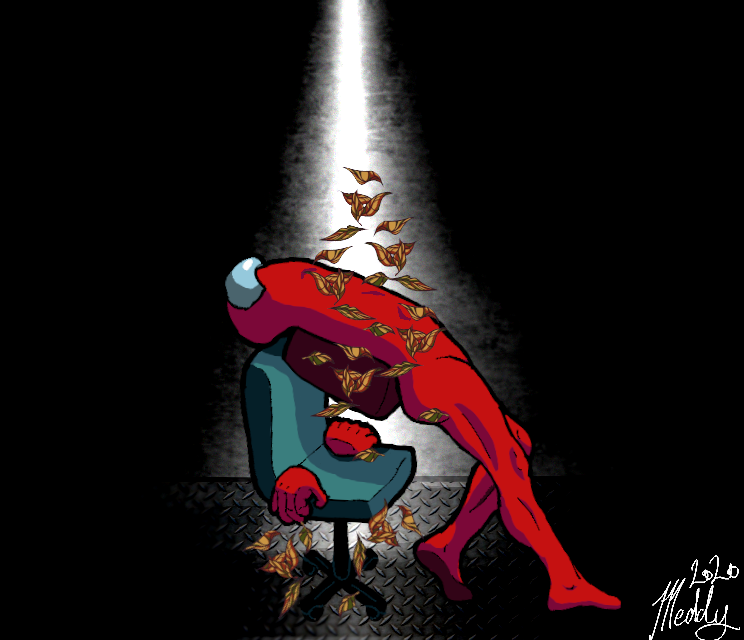
Sometimes I don’t want to write about video games. Sometimes I draw about them.
12 Jul

ink on paper – 2018
For the last three years or so I’ve been going to a weekly trivia at The Side Quest. At some point early on, I started drawing things (usually related to the team names we chose) for the host of the quiz. Each one of them kept the drawings (as far as I know) and took them with them as they moved on. The newest quizmaster was previously the scorekeeper, so he was aware of this tradition. He’d also earned himself the nickname of “Baby James Franco”.
This is the first drawing he’s received as quizmaster!
7 Jul
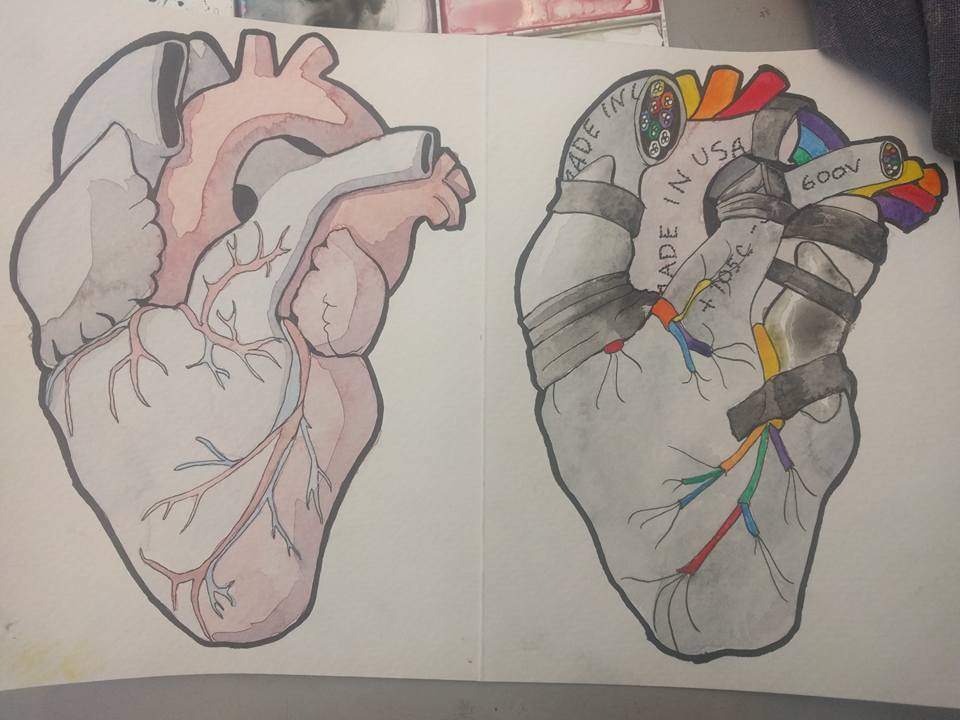
watercolor – 10×7 in – 2018
More art I’ve neglected to upload. I plan to start putting stuff up daily or something close to that. I’ve also made a givinggrid donation page to help me pay for tuition. There are custom art rewards!
I don’t know why I painted hearts. Jonas says they are a normal heart and a cool heart. I forgot to take a picture of the final shading but it’s not too much different.
Comments Off on ART – “Hearts”
Filed under: Art, Watercolor, whatever
1 Jul
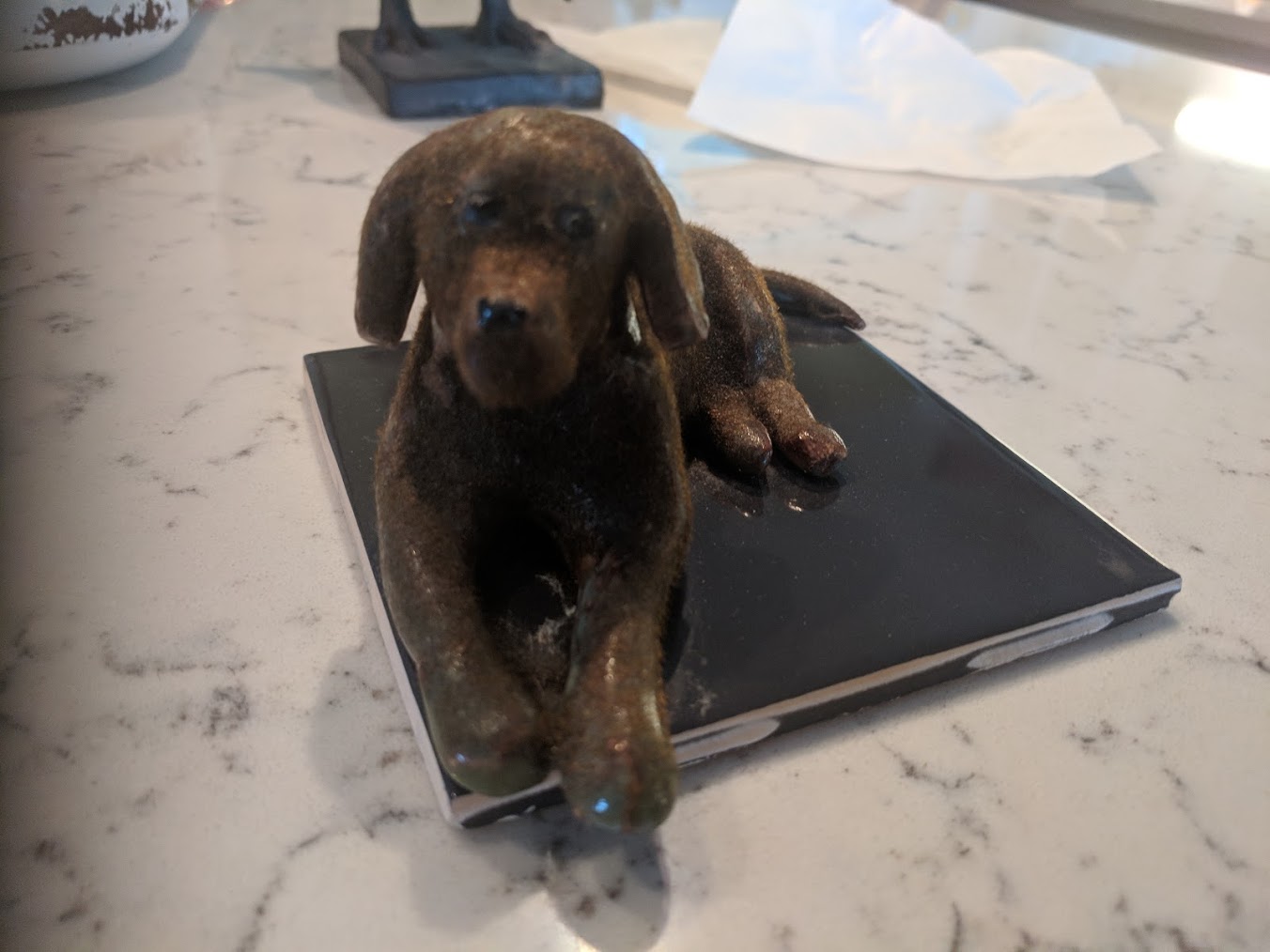
Ceramic – 4x4x3 inches – 2013
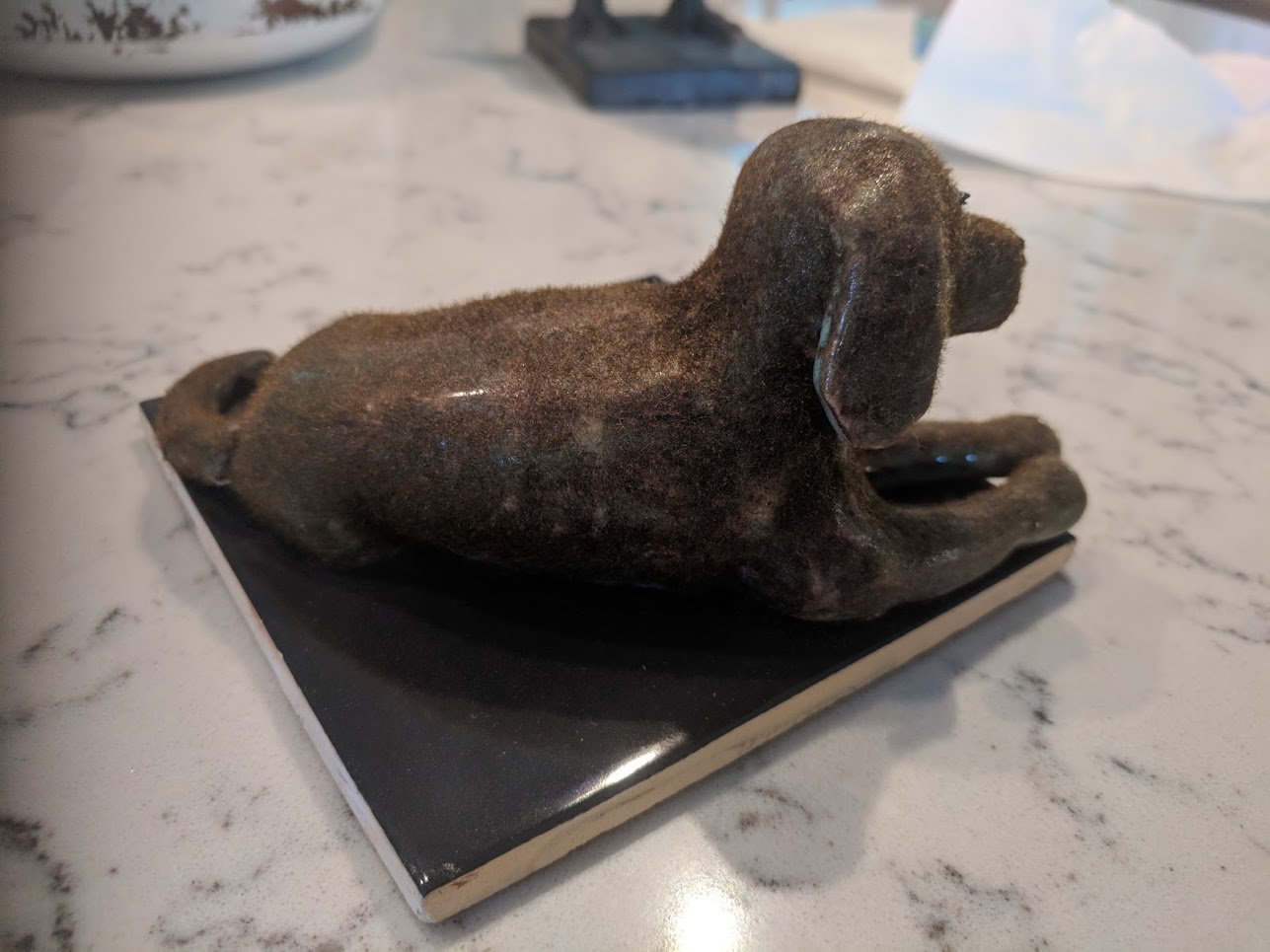
Ceramic – 4x4x3 inches – 2013
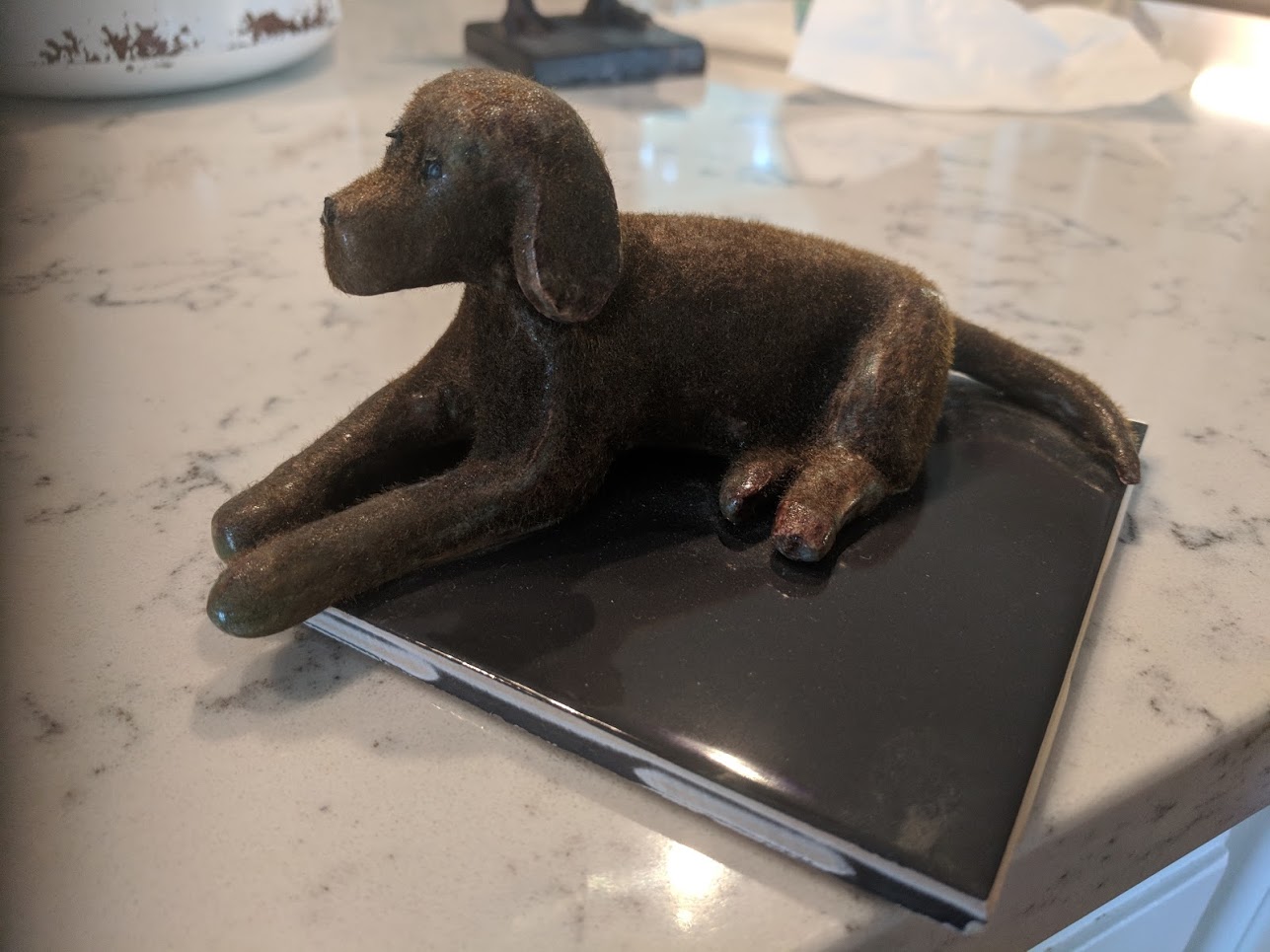
Ceramic – 4x4x3 inches – 2013
More art I’ve neglected to upload. I plan to start putting stuff up daily or something close to that. I’ve also made a givinggrid donation page to help me pay for tuition. There are custom art rewards!
Just like the previously posted Emmett statue, I made a statue of Emma, my father-in-law’s & step-mother-in-law’s pupper. She was a chocolate lab.
28 Jun
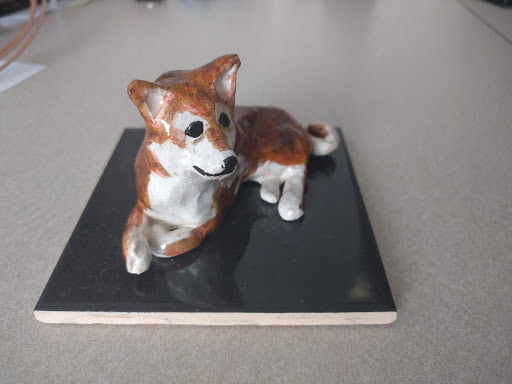
Ceramic – 4x4x3 inches – 2013
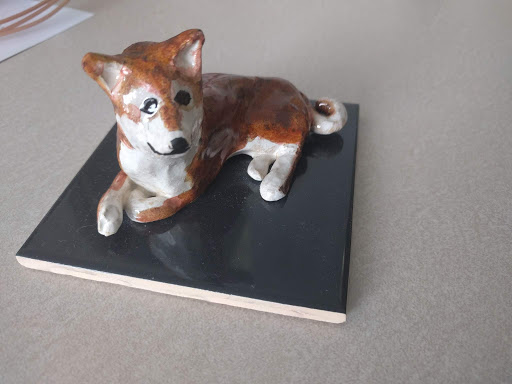
Ceramic – 4x4x3 inches – 2013
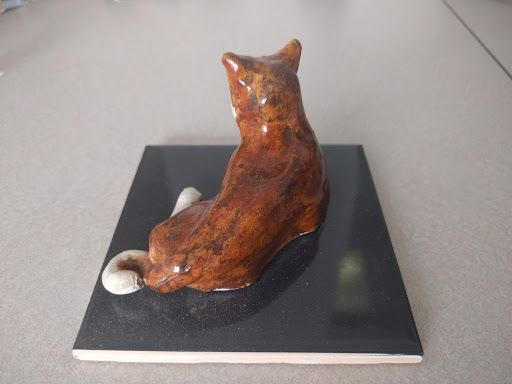
Ceramic – 4x4x3 inches – 2013
More art I’ve neglected to upload. I plan to start putting stuff up daily or something close to that. I’ve also made a givinggrid donation page to help me pay for tuition. There are custom art rewards!
Back in 2013 I took my first (and last) ceramics class. I felt like I needed more than one semester to be able to figure out a pottery wheel, but I also knew they were forcing the ceramics professor to retire. Out of the 10 or so students in the class, I was the only degree-seeking one (and thus the only one paying full tuition). This was apparently normal for the class—the Project 60 students constantly re-enrolled for the class to get free use of the studio and kilns. Project 60 is one of many programs in the state that allows those over the age of 60 to attend state colleges for nearly free (only pay lab fees) as long as they aren’t working for a degree (otherwise they have to pay). Since the school wasn’t making money off his class, they encouraged him to retire. I’m not thrilled about them forcing people out in that way, but I can understand their point. While there is no ceramics specific class anymore, there is still a sculpture class which includes ceramics.
But anyway, I didn’t get the hang of the pottery wheel so I mostly made statues or figurines. This here is my Emmett pupper, which sits on my husband’s desk at work. Emmett is our ancient Shiba Inu, who we adopted when he was full grown and feral, so we don’t know how old he actually is. We’re estimating 14-16 at this time.
26 Jun
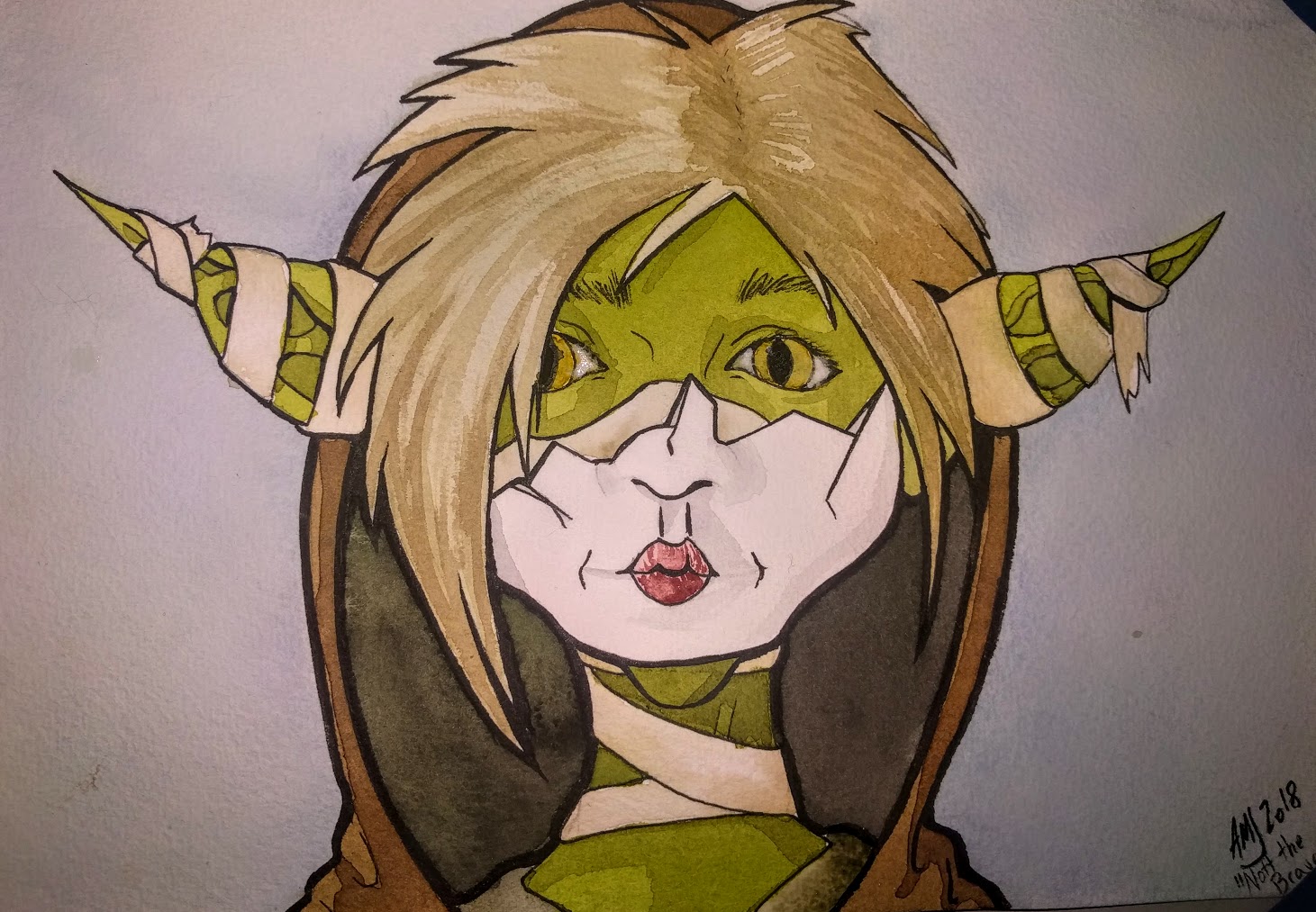
Watercolor – 10×7 inches – 2018
More art I’ve neglected to upload. I plan to start putting stuff up daily or something close to that. I’ve also made a givinggrid donation page to help me pay for tuition. There are custom art rewards!
After an episode of Critical Role wherein Nott expressed she’s like a mother to Caleb, I envisioned her having the “LET ME SPEAK TO YOUR MANAGER” haircut.
Comments Off on ART – “Nott the Brave”
Filed under: Art, Critical Role, Fanart
22 Jun
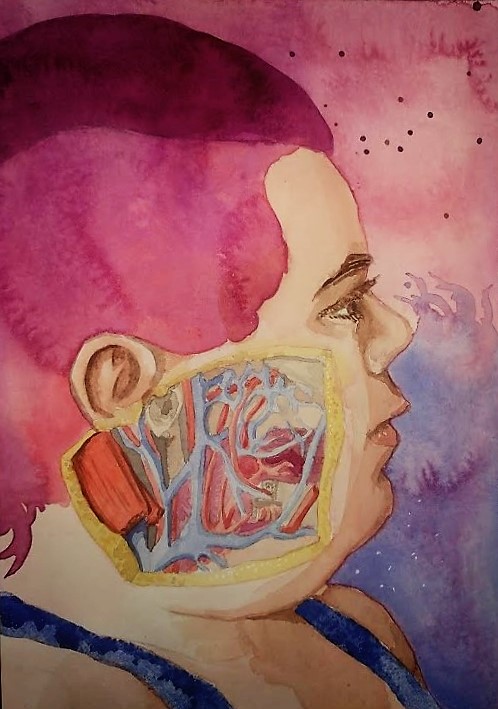
Left Middle – Watercolor – 7×10 inches – 2018
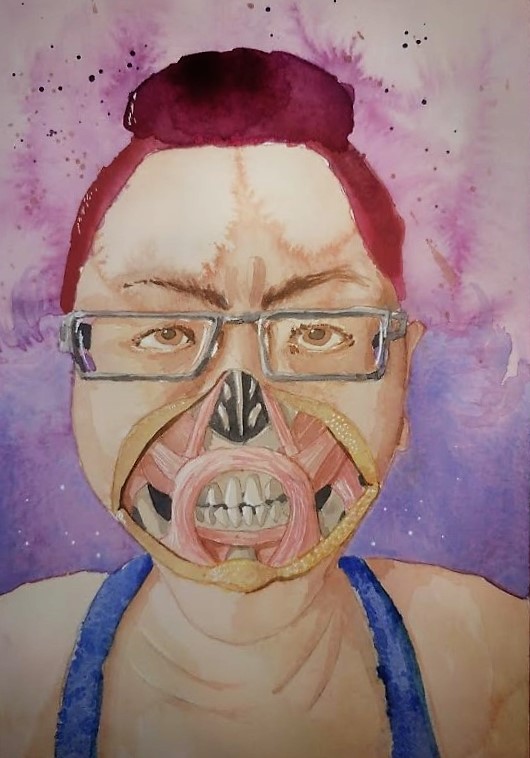
Center Middle – Watercolor – 7×10 inches – 2018
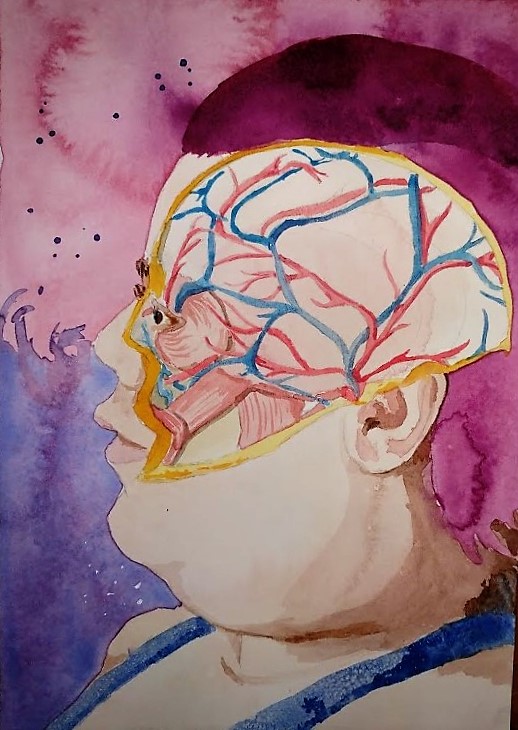
Right Middle – Watercolor – 7×10 inches – 2018
Most recent of the art I haven’t uploaded lately. I plan to start putting stuff up daily. I’ve also made a givinggrid donation page to help me pay for tuition. There are art rewards!
I’ve been doing a lot of art related to what’s (scientifically) under my skin lately. I intended this to be a 9 part series of medical diagrams that are all Brady-bunching around the central figure that stares at the viewer.
Comments Off on ART – “What’s Inside”
Filed under: Art, Watercolor
16 Feb
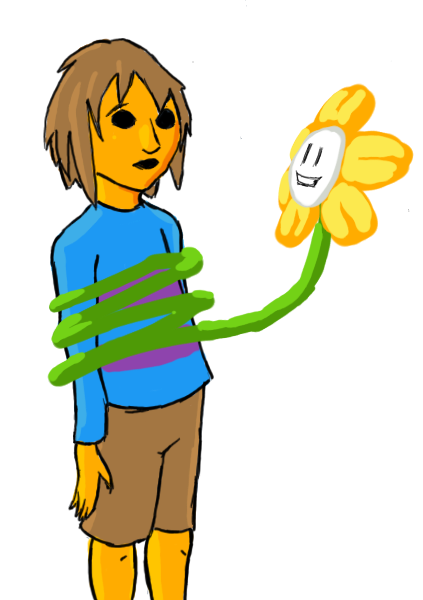
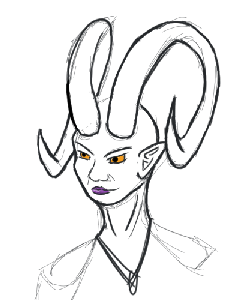
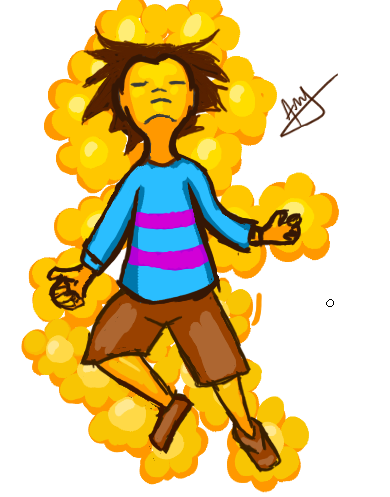
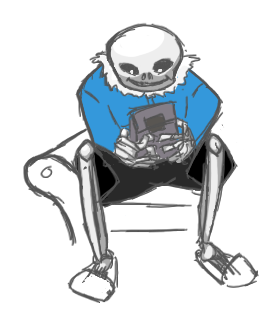
someone I follow on tumblr hosted a drawpile so I drew some Undertale stuff.
Comments Off on Some Art 2-16-16
Filed under: Art, Fanart, Undertale/Deltarune
19 Apr
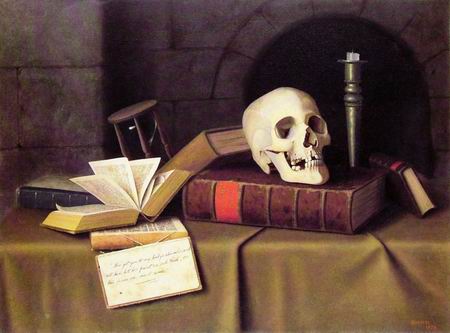
Memento Mori, “To This Favour,” 1879
Oil on canvas
William Michael Harnett
(American, born Ireland, 1848-1892)The Latin Term memento mori describes a traditional subject in art that addresses mortality. In Harnett’s example, the extinguished candle, spent hourglass, and skull symbolize death. A quote from William Shakespeare’s Hamlet, inscribed on the inside cover of a tattered book, reinforces the theme. It comes from the play’s famed graveyard scene, where Hamlet discovers a skull and grimly ponders his beloved Ophelia, ironically unaware that she is already dead. The “paint” in the quote not only refers to Ophelia’s make-up, but also wittily evokes the artifice of Harnett’s picture.
Mr. and Mrs. William H Marlatt Fund 1965.235
(The Cleveland Museum of Art)
While most still life paintings offer no narrative in their imagery, this does not mean there is no meaning to the piece. The meaning of this work by William Michael Harnett is offered directly in the title: Memento Mori, “To This Favour”. Even viewers not familiar with the Latin phrase memento mori can suss its meaning when viewing Harnett’s painting. An empty hourglass, a burned candled, and a skull are all icons of passing on, giving rise to feelings of one’s own mortality. As the phrase translated states, “Remember, you must die,” and so the viewer does. However, the meaning of this memento mori goes beyond that simple phrase.
“To This Favour” is a predominately dark piece, both visually and thematically, drawing the viewers attention to specific iconography with the touches of whiteness. The largest body of light color is the pages of the open books on the left. Harnett is known for his style of trompe l’oeil; in this instance he tricking the viewer’s eye into thinking one of the open books is motion. The upper of the two open books has three pages splayed in a position that would be impossible to capture in a still life painting if it were actually in motion. Each of these three pages curves in the exact manner one would expect it to do if it were falling under its own weight after being turned and left to fall to the opposite side of the book. Such is the trick, the tromp l’oeil, that the eye thinks the image so real that the page would fall at any moment. The book itself shows no meaning of death. The viewer cannot see the title nor read the text within it. Rather than be a symbol of the permanency of dying, the book, being half-open and in motion, may be a symbol of life: a life life half-over and passing quickly to the end.
The lower book is open as well, though its cover is torn from the binding. The aged, damaged book cover hangs over the edge of the table by a thread as if it, soon shall die. The inside cover is the closest object in the painting to the viewer, demanding one’s attention to the quote it bears. From Shakespeare’s Hamlet on the subject of death, the inscription reads: “Now get you to my lady’s chamber, and tell her, let her paint an inch thick, to this favour she must come.” In the play, the paint is Ophelia’s make-up; in this piece, the paint is the oils used by Harnett. Both paints are applied with thoughts death, which may have prompted the artist to use this particular quote. As one may know, Ophelia is already dead at the time the line is spoken by Hamlet, further compounding on the theme of death in the painting.
The next largest collection of whiteness is the skull, quintessentially the most recognizable symbol of death. The skull, like the book, is aged and damaged. It lacks several teeth and is a dirty, off-white color. Unlike the book, the skull faces to the side. The skull looks to the right of the viewer, whereas the book’s cover opens to the viewer directly. This positioning by Harnett aids in drawing the eye to the quoted text for which the painting is titled. The skull rests atop yet another book, this one much thicker and less damaged than the first two. The spine shows it to be a collection of Shakespeare’s Tragedies, which, like the thoughts this painting is meant to provoke, is full of death, loss, and mourning.
Another obvious symbol of passing used by Harnett is the extinguished candle. Light entering the scene from the left side of the painting creates a reflection on the candlestick. A broken line of white draws the viewer beyond the darkness of the whole piece to the candle. On the table, it sits behind the skull-topped book. Behind the candlestick and skull is naught but a darkened archway; a light-less passage through which the used-up candle cannot guide the viewer. Even the off-painting light source cannot guide the viewer’s eyes to what lies within that hall. It creates a sense of anxiety and anticipation at the thought of the great beyond. One cannot see what is through the passage, just as one cannot know what is seen after death.
Behind the open books sits an empty hourglass, presumably the sand has run out to the bottom though it is not seen in the painting. It is yet another iconic reminder of one’s own mortality and the passage of time. It is tilted in a slightly unsettling way and is perhaps propped up by one of the other books behind the open pair. Like the open book before it, the hourglass appears to be at the cusp of motion. It appears ready to fall, or even already falling, in its tipped position. The only portion of the glass seen is that which reflects the light from the left. The lighting effect may be Harnett’s real reason for presenting the hourglass at an angle. The glass is so clean that the viewer can see to the stone wall beyond and, had the hourglass not been positioned as it is, the reflected light may have been too much or too little. Too little, and the hourglass would go unnoticed. Too much and it would detract from the whiteness of the book cover and detract from the intended focus.
The books surrounding the hourglass have no visible titles, though they appear to be at different stages of aging. One book, positioned at an angle on the left side of the Shakespeare tome, has a few pages that seem to be shifted and poking out of the rest. This can be read as a well-used book that is possibly near “death,” though not as near as the book with quote upon it is. A book lays flat to the left of the hourglass and the open books. It appears to be smooth and not at all damaged, though perhaps a bit dusty. The sixth and final book is perhaps in the same stage of life: its pages are neat and straight, but are yellowed from age.
The table upon which this memento mori still life is placed is a drab, olive-brown. It does not shine like the silk painted by other artists using oils, but it is as smooth. It seems to be very plain, which could be indicative of it being over-used and near its end along with the books and candle. The lack of luster in the cloth, as well as the rest of the objects, shows death to be very mundane and common. This fits with the sense of tragedy in Hamlet as no death in the play is glorious, no one died a martyr, and celebrated at another’s death.
Still life paintings are oft devoid of deep meaning. However, William M. Harnett’s Memento Mori, “To This Favor” bears a rich subtext of the commonality of aging and loss in addition to it’s obvious subject of death. Each object is positioned to relate to the other as aging, death, and anxiety all relate to each other. Harnett’s work reminds one of one’s own mortality as intended, but also reminds us that those we love will pass, too.
Comments Off on An Essay for an Art History Class
Filed under: Art, History, Non-Fiction, whatever, Writing
6 Apr

Las Meninas, Diego Velasquez, 1656
Before reading this I feel it is important to understand the context under which it was written. This is an Art History class for non-art majors, focusing on the renaissance through cubism. This is for exam two. The class is two hours long, and the first portion of the test is fill-in-the-blank coupled with viewing of projected slides of various paintings the class had learned about. The essay portion allows the student to choose one of three topics and use whatever time is left of the two hours to write the essay. The test started at 6:15 PM and I left the classroom at 6:48 PM. I’m not certain how much of that time I was actually writing the essay, as I was writing between slides as well.
The prompt I chose for the essay was: “Valesquez’s Las Meninas 1656. Describe the form and content of the painting. What are the two subject matter. Describe the way the artist includes the viewer and how he leaves the meaning uncertain.”
And so, here is what I refereed to as my “worst essay ever” (though I suppose if I wrote “dog poop” a few times and turned that in, it’d be worse):
Las Meninas is a portrait of the princess of Spain, while implying to the viewer that they are the subject. As the handmaidens attend to the princess, she, the attending dwarves, and the artist acknowledge the viewer’s position is occupied. The mirror in the background shows that the king and queen are looking on, possibly the subjects of the painting-within-the-painting. Velasquez effectively places the viewer in the king and queen’s shoes. It is only momentarily, however, as a courtier in the back of the studio opens a door to prepare the way for the royal visitors.
All the above is subject to speculation, however, as the man in the back can be coming or going. As well, it is not clearly indicated if the royal pair are visiting or sitting for a portrait. The king’s dog also in the painting, but what he’s doing there (other than being prodded by a dwarf’s foot) is not certain. I personally read this painting as the king and queen having their portrait done and the princess is waiting (possibly impatiently as implied by the maidens fussing over her) for her turn to be included in the portrait.
There are two light sources in the painting. From the right, natural light enters and brightens the princess showing she is the true focus of the painting. Rather than being a simple group portrait, Velasquez included implied movement, making the painting a snapshot in time. The second light source is in the back, where a man looks on, interrupting the scene just as the light interrupts the dark background.
Comments Off on Worst. Essay. Ever.
Filed under: Art, History, Non-Fiction, Writing
27 Feb
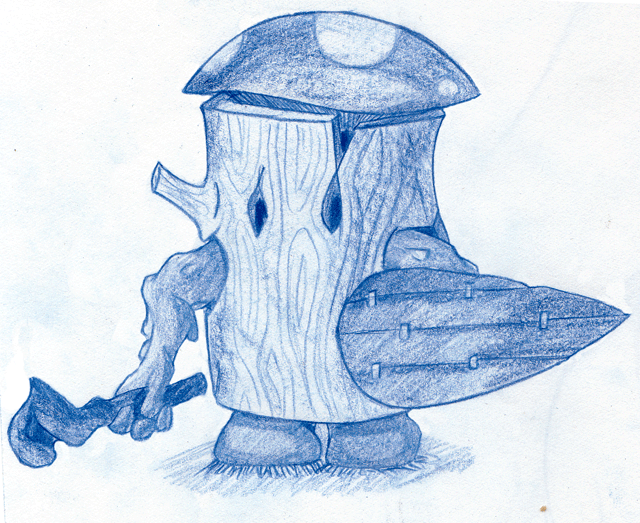 Someone was making a myconid race, mushroom people, so I made a character and played it a bit. He was Chestnut, the myconid druid. He wore ironwood armor, had an ironwood shield and club, and pretty much avoided combat at all costs. The annoying thing about playing the game was that the DM wanted Chestnut to FIND his animal companion rather than just HAVE it at the beginning, but then he never put the character in any situations where there were animals. Always vermin and magical creatures. After a while, I was in a swamp, and I just said, “look, can I find a snake here or whatever” and he said “NO YOU HAVE TO EARN THE ANIMAL’S TRUST.” So he made me fight vermin again. WTF. Can’t befriend vermin!! Need something with the ANIMAL type! (d&d 3.5e).
19 Mar
I saw a How-To by Propmedic/Juego/Yoink/Wossname on how he made his bonesaw. First thought: AWESOME. Second thought: I want one. Third thought: I want mine a little thinner and a little longer.
So I made an outline.

20″ bonesaw from handle to tip. I cut one piece from some black mounting board using this pattern. Then I painted the blade part with some liquid silver I had leftover from another project.
Comments Off on Bonesaw.
Filed under: 3D, Art, Fanart, Team Fortress 2
14 Mar
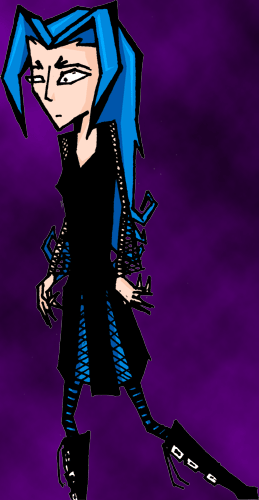
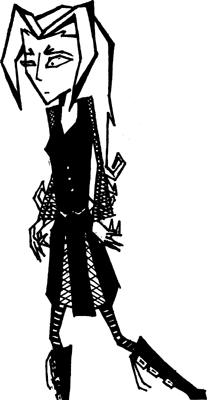 After reading a bunch of JTHM by Jhonen Vasquez, I decided to draw my character in his style. And here you have it – not quite Nny, but yay all the same.
4 Mar
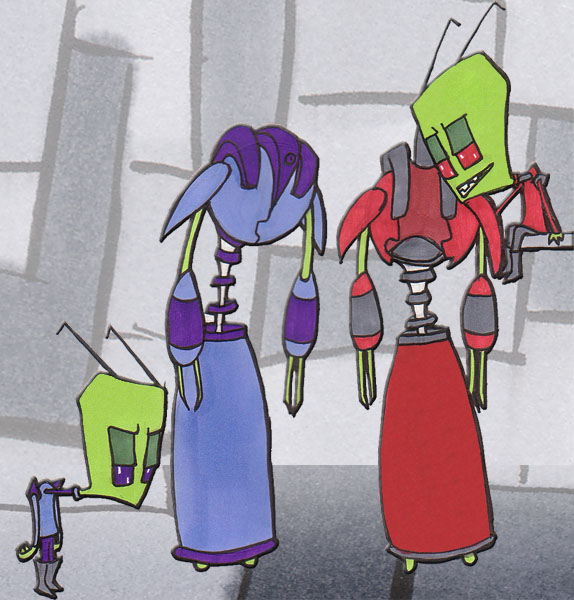 After noticing that the bodies of the Almighty Tallest keep getting thinner, it made me think, “What if there’s nothing there at all?” In the picture, you can see our Almighty “Tallest” next to their tall suits, Purple on the left, Red on the right. They aren’t tall at all, they’ve just got big heads, like Dib.
Comments Off on Zim – The Almighty Secret
Filed under: Art, Fanart, Invader ZIM, Marker
16 Jan
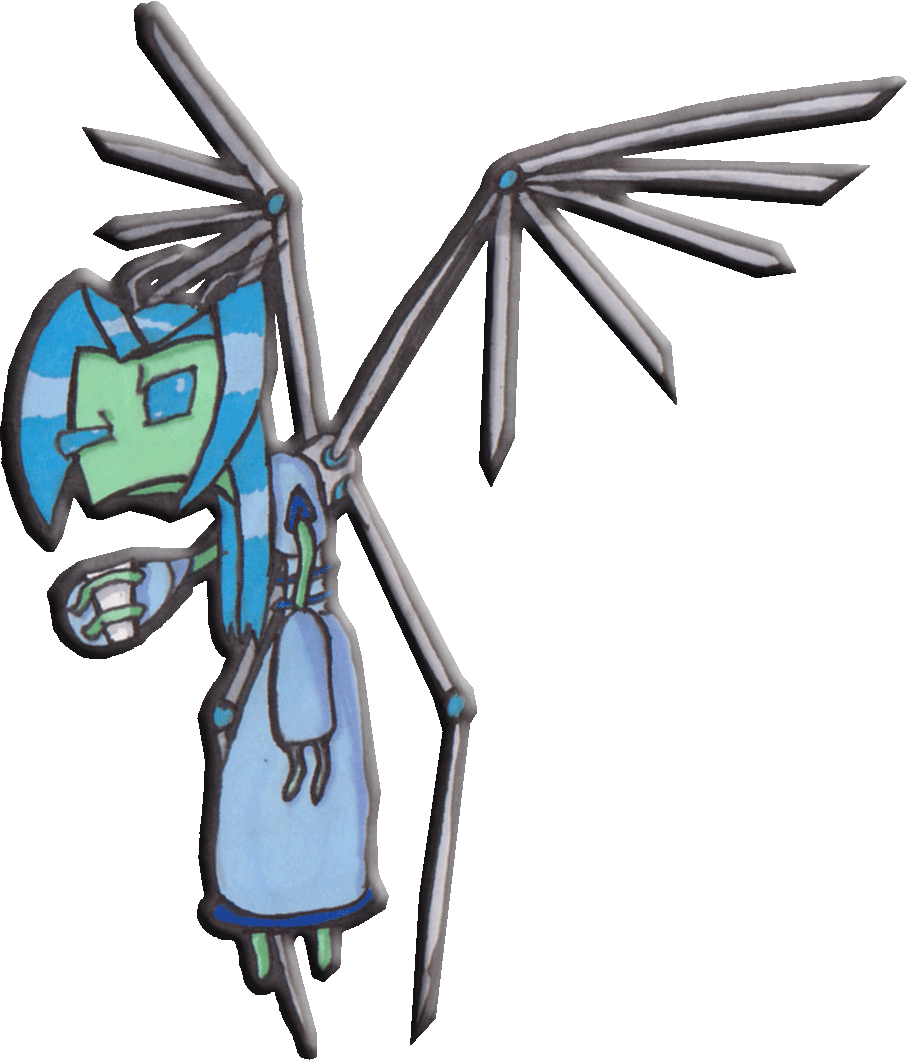
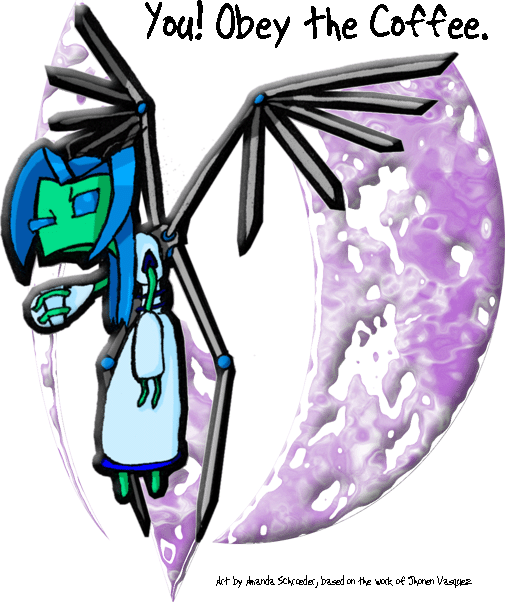 YAY!
YAY!
Comments Off on More ZIM Fanart
Filed under: Art, CG, Fanart, Invader ZIM, Marker
15 Jan
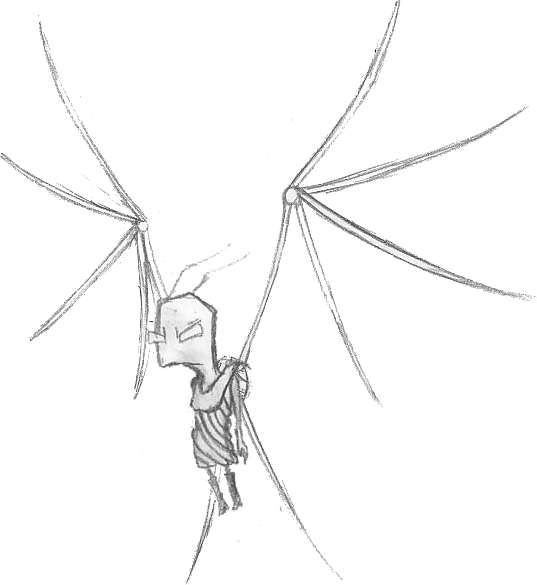
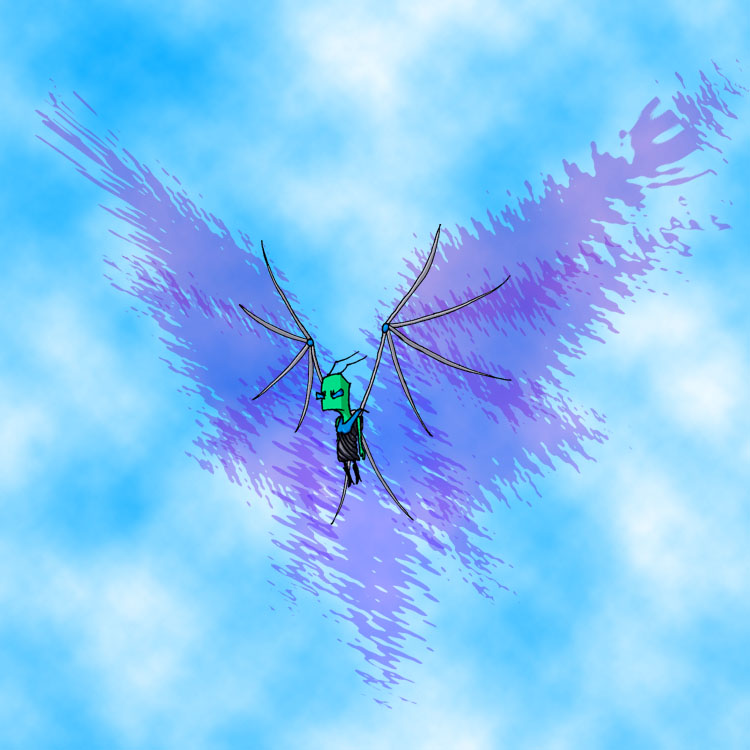
Comments Off on Invader Zim Fanart
Filed under: Art, CG, Fanart, Invader ZIM, Pencil
15 Jan

INVADER PANTS
Comments Off on Invader Pants
Filed under: Art, Fanart, Invader ZIM, Marker
6 Jan
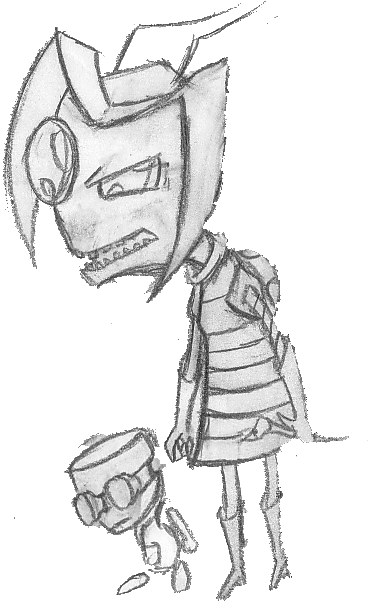
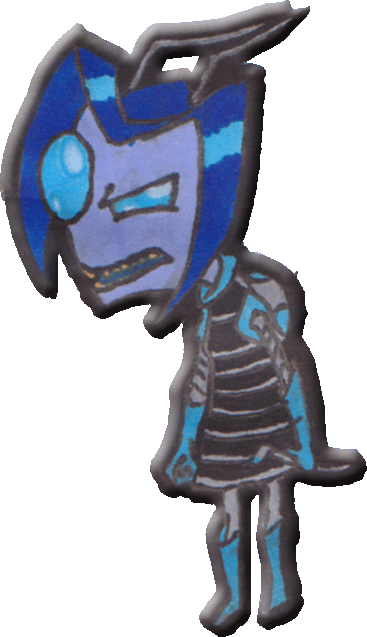
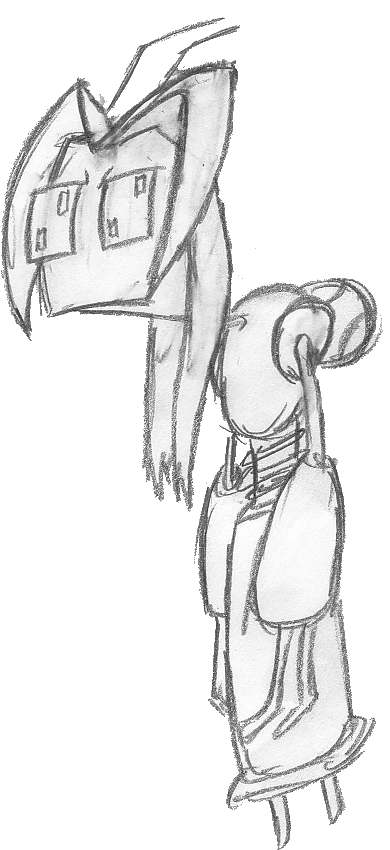
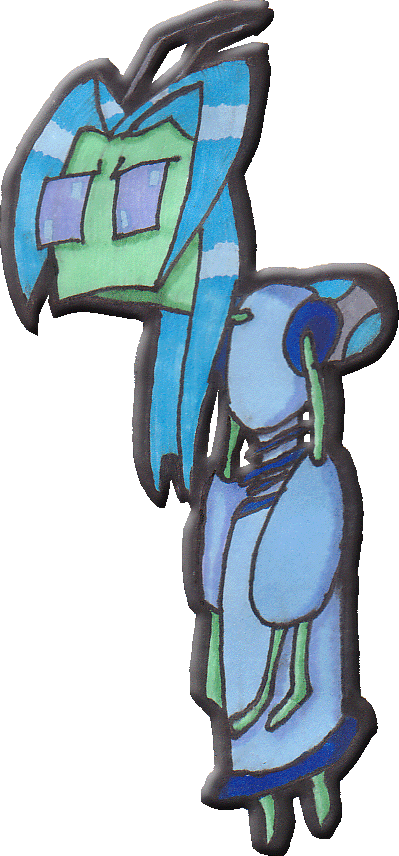
Comments Off on ZIM Fanart
Filed under: Art, Fanart, Invader ZIM, Marker, Pencil